A seal that can be peeled away cleanly provides little protection. A seal that leaves obvious evidence, carries a unique number and suits the surface gives your team a practical way to spot interference before equipment, stock or sensitive areas are put back into use. That is why choosing between security seal types is about more than selecting a material or a colour.
For UK organisations managing IT equipment, utility cupboards, stock cages, meters, cases or delivery containers, the right seal creates accountability at the point where it matters. It should be difficult to remove without leaving evidence, straightforward for authorised staff to check, and suitable for the conditions it will face.
What a security seal should achieve
Security seals are designed to show unauthorised opening, removal or access. They are not always intended to physically stop a determined person. Their value lies in making tampering visible and giving an organisation a clear control point for inspection, investigation and replacement.
The best choice depends on what is being secured. A server casing needs a different solution from a roll cage, a first-aid cabinet or a tote box. Surface texture, exposure to moisture, expected handling, inspection routines and whether the seal needs a serial number all affect the specification.
A well-chosen seal should also fit the process behind it. If staff cannot easily record a number, recognise a broken seal or obtain replacements quickly, even a technically strong product can fail in practice.
Security seal types for common applications
Void security labels
Void labels are among the most widely used tamper-evident seals for equipment, cabinets and access panels. When removed, they reveal a hidden message such as VOID on the item, the label itself, or both. The message makes it immediately clear that the seal has been disturbed.
They work well on relatively smooth, clean surfaces including painted metal, plastics and many equipment housings. A custom void label can include a company name, sequential number, barcode or QR code, giving facilities and IT teams a straightforward audit trail.
There are trade-offs. The adhesive must suit the surface and operating environment. Dusty, oily, heavily textured or low-energy plastic surfaces can reduce adhesion, so a sample test is sensible before committing to a large order. Some void materials are also more visible after removal than others, which should be agreed at the specification stage.
Destructible vinyl labels
Destructible vinyl is designed to fracture into small pieces when someone tries to lift it. Unlike a void label, it does not usually leave a printed warning message behind. Instead, the label itself breaks apart, making removal and reuse impractical.
This type is often used on fixed assets, electrical equipment, warranty points and items where a compact, permanent-looking seal is required. It can also carry asset identification details, making it useful where tamper evidence and asset control overlap.
Destructible labels are a strong option where the seal is unlikely to face frequent cleaning or abrasion. They are not ideal if the label must be removed neatly at end of life, and they need a sound bond to the substrate to perform as intended.
Tamper-evident transfer labels
Transfer labels leave part of their construction behind when removed. Full-transfer versions leave the entire printed message or pattern on the application surface, while partial-transfer versions split the evidence between the seal and the surface.
They are useful where clear visual evidence is the priority, particularly for restricted cabinets, electronic devices, enclosures and service access points. A transferred pattern is difficult to disguise and provides a clear prompt for further checks.
The decision between full and partial transfer is practical. Full transfer creates highly obvious evidence on the item, but that residue may be unsuitable for certain finishes or customer-facing equipment. Partial transfer can offer a cleaner balance where the asset must remain presentable after inspection.
Pull-tight plastic seals
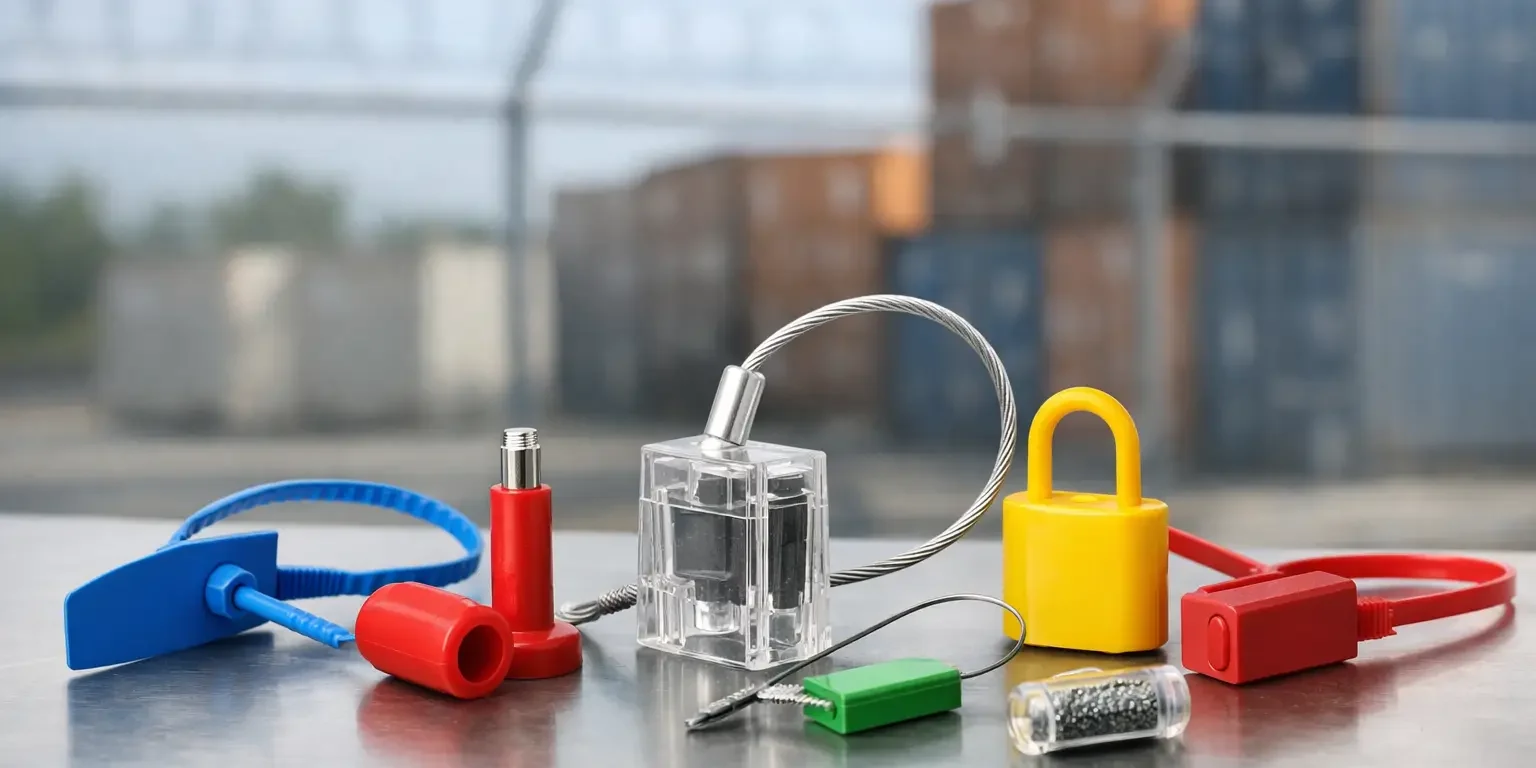
Pull-tight seals are adjustable plastic security seals used for bags, cages, containers, valves and other applications with an aperture or hasp. Once the tail is pulled through the locking chamber, it cannot normally be withdrawn without cutting or breaking the seal.
They are commonly available with sequential numbering and sometimes barcodes. This makes them useful for dispatch controls, stock movements and custody checks. For example, an operations team can record the seal number when a cage leaves a store and confirm the same number on arrival.
A pull-tight seal should be selected by length, breaking strength and locking design, not simply price. An overlong tail can be inconvenient and easier to manipulate, while a seal that is too light for the application may break during normal handling. For high-value or high-risk loads, documented handover procedures matter as much as the seal itself.
Fixed-length and padlock-style seals
Fixed-length plastic seals have a pre-set locking length and are often used for meter boxes, doors, trolleys and smaller containers. Padlock-style seals provide a compact locking mechanism for applications with a suitable hasp or latch.
These security seal types are quick for staff to fit and easy to inspect. Their limitation is flexibility: the opening they secure must suit the seal size. They are best where the same application is repeated across a site or fleet and consistency is more valuable than adjustability.
Cable seals
Cable seals use a steel cable locked into a metal or high-strength body. They suit larger hasps, shipping containers, gates, heavy cases and applications where a plastic seal would be too easy to cut.
A cable seal offers a higher level of physical resistance, but it is still primarily an indication of unauthorised access rather than a replacement for a proper lock or secure storage. Cable diameter, cable length, locking body and numbering method should match the risk level and inspection process.
Choose by risk, surface and workflow
The most suitable seal is usually found by answering a few operational questions before ordering. Consider whether you need:
- visible evidence of label removal from an asset or enclosure;
- a numbered seal for handover, dispatch or chain-of-custody records;
- a seal that can secure an opening, handle or hasp rather than a flat surface;
- resistance to outdoor exposure, cleaning chemicals, heat or rough handling; and
- printed identification, such as a logo, serial number, barcode or QR code.
For asset protection, a numbered void or destructible label often gives the best combination of identification and tamper evidence. For moving stock or secured containers, pull-tight, fixed-length or cable seals are usually more appropriate. A security label cannot close a gap around a cage door, and a cable seal cannot provide reliable evidence that a laptop casing has been opened. The application defines the product.
Numbering, barcodes and inspection controls
Unique serial numbers turn a basic seal into a traceable control. They allow staff to record which seal was applied, by whom, where and when. This can be managed in an asset register, stock system or simple handover log, depending on the scale of the operation.
Barcodes and QR codes can speed up checks, particularly where large quantities of equipment or containers are handled. The format should work with the scanners and software already in use. There is no benefit in printing a code that cannot be read reliably by the people expected to use it.
Inspection should be simple enough to happen consistently. Staff need to know what an intact seal looks like, where the serial number is recorded and what to do if a seal is missing, broken or shows a void message. Photographing the seal at handover can be worthwhile for higher-value equipment or disputed deliveries.
Practical specification advice
Adhesive labels perform best when applied to clean, dry surfaces at a suitable temperature. Avoid applying them over dust, silicone residue, loose paint, deep texture or curved edges unless the material has been tested for that use. Giving the adhesive time to bond before putting the item into hard service can also improve performance.
For bespoke orders, provide the intended label size, surface material, operating conditions, required wording, numbering range and whether a barcode or QR code is needed. Security-Label.co.uk can help assess the material and print layout so the finished seal supports both day-to-day checks and your wider asset-control process.
Do not treat a broken security seal as a minor housekeeping issue. It is a useful signal that deserves a defined response: isolate or inspect the item, check the relevant record, establish who last had custody and replace the seal only after the check is complete. That simple discipline is what turns tamper evidence into meaningful control.