
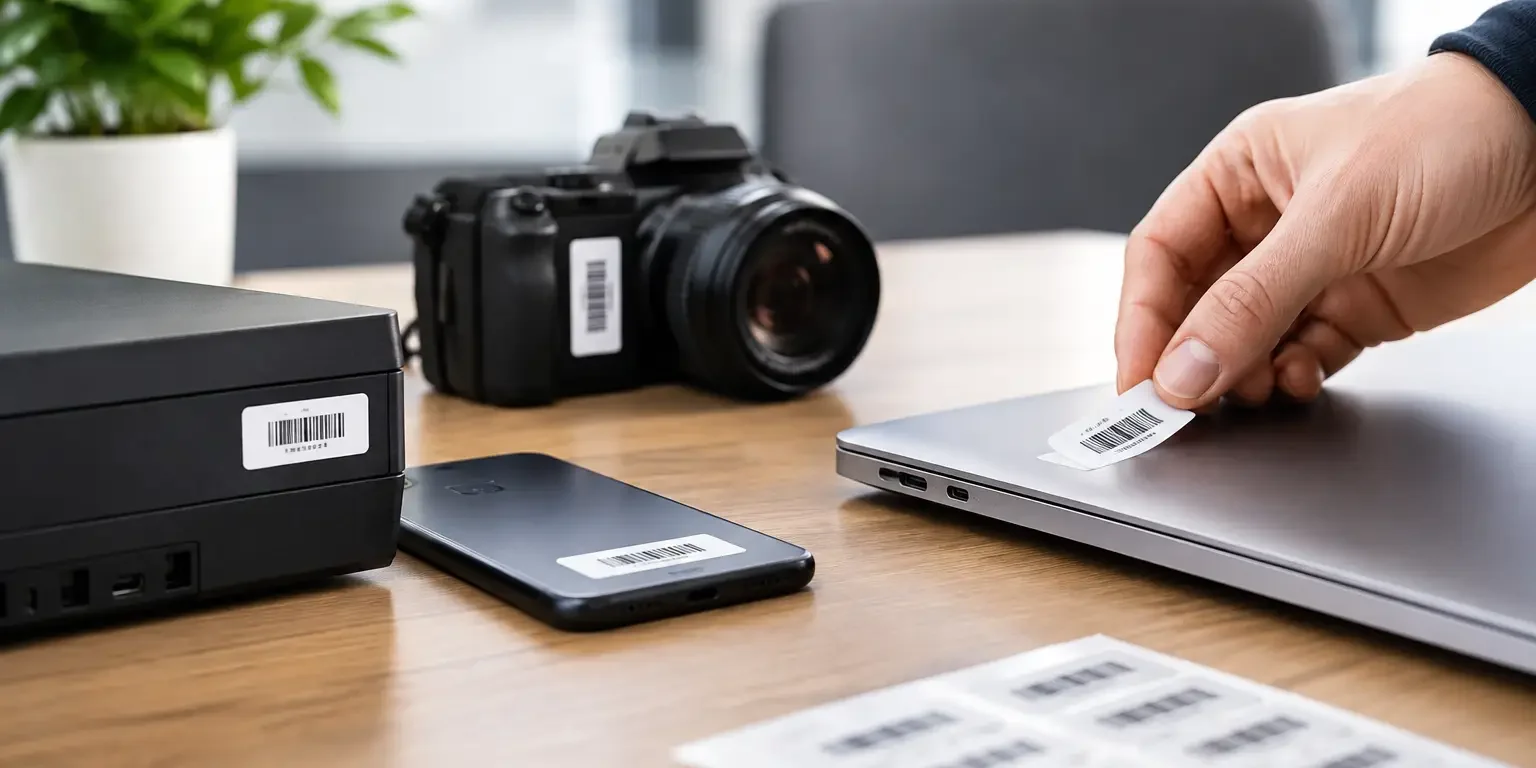
A missing laptop, a projector moved between rooms, or a tool returned without a record can turn a routine audit into a costly investigation. Effective asset management starts with knowing exactly what you own, where it should be and how to identify it quickly. A durable, clearly specified asset label gives every item a visible identity that staff can scan, check and account for.
For organisations managing IT equipment, machinery, educational resources, medical devices, office furniture or site tools, labels are a practical control rather than an afterthought. They support asset registers, discourage casual theft and make it easier to prove ownership when equipment leaves its usual location.
Why asset management depends on clear identification
An asset register is only useful when it matches the equipment on the ground. If an item has no reliable identifier, staff may have to rely on a description such as “Dell laptop in accounts” or “cordless drill, maintenance”. That creates obvious problems when several similar items are in use, equipment is relocated, or ownership needs to be verified.
A unique serial number on every asset label gives the register a fixed reference point. Add a barcode or QR code and the same number can be captured in seconds using a handheld scanner or mobile device. This reduces transcription errors, speeds up stocktaking and gives facilities, IT and finance teams a common method of working.
The benefits are particularly clear during annual audits, insurance checks and equipment handovers. Instead of checking items manually against vague descriptions, a team can scan each label and investigate only the exceptions. For schools, local authorities and businesses with multiple departments or sites, that can save a significant amount of time.
Labels also act as a visible deterrent. A clearly marked item is harder to pass off as unowned, especially where the label states the organisation’s name, displays an asset number or leaves evidence if someone tries to remove it.
Choosing asset management labels for the job
There is no single label material that suits every application. The right choice depends on the surface, the environment, the expected life of the asset and whether tamper evidence is required. A label that works perfectly on an indoor plastic computer case may not survive on outdoor plant equipment, a textured tool case or equipment cleaned regularly with chemicals.
Standard polyester labels for indoor equipment
Polyester asset labels are a dependable choice for many indoor applications. They are commonly used on computers, monitors, printers, telecoms equipment, furniture and electrical items. A good-quality polyester label offers crisp print, strong adhesion and resistance to normal handling, making it suitable for assets expected to remain in service for years.
Colour can help staff recognise ownership or department at a glance. However, the printed asset number should remain the main identifier. Colours can be helpful for categorisation, but they are not a substitute for a unique number that links directly to your register.
Tamper-evident labels where ownership needs protecting
Tamper-evident labels are designed to show that removal has been attempted. Depending on the material selected, they may leave a visible residue, break apart on removal or reveal a hidden message such as VOID. They are well suited to laptops, audiovisual equipment, laboratory instruments, hired equipment and valuable tools.
The trade-off is straightforward: a more aggressive adhesive or destructible material is intended to be difficult to remove cleanly. That is useful for theft deterrence, but it may not be appropriate for every surface. Delicate finishes, powder-coated equipment and items that are regularly refurbished should be assessed before ordering. A sample test on the actual surface is the sensible approach.
Durable labels for demanding environments
Assets used in workshops, warehouses, vehicles or external locations need labels that can tolerate more than office handling. Exposure to moisture, dirt, abrasion, temperature changes and cleaning agents can shorten the life of an unsuitable label.
In these cases, material choice and adhesive specification matter as much as the printed design. Labels should also be positioned where they can be scanned without being exposed to constant friction, standing water or contact with moving parts. A lower-cost label can become expensive if it needs replacing repeatedly or causes gaps in the audit trail.
What to put on an asset label
The most effective designs are clear rather than crowded. Every extra line of text makes a small label harder to read, particularly once it is fitted to a curved surface or viewed in poor light. Start with the information your staff actually use when checking an item.
Most organisations benefit from a unique asset number, company or organisation name and a machine-readable code. Depending on the application, you may also include a department, contact telephone number, “Property of” wording, purchase reference or an instruction such as “Do not remove”.
Serial numbering is central to control. Numbers can be supplied sequentially, for example IT-000001 onwards, or created to match an established numbering convention. If you already have asset records, keeping the existing format avoids unnecessary data clean-up and helps staff adopt the new process more quickly.
Barcodes should be selected to suit the scanning equipment and software already in use. Code 128 is a flexible, compact option for alphanumeric asset numbers. Code 39 remains common in older systems. QR codes can hold more information and work well with smartphones, but they need enough print area and a suitable scanning workflow. A QR code is not automatically better than a linear barcode – the best format is the one your team can scan reliably.
Before production, confirm whether the code will contain the asset number alone, a web address, a location reference or another data string. The printed text below the code should normally match the encoded value, allowing staff to identify the item even if a scanner is unavailable.
A practical process for better asset control
Labels work best as part of a defined process. Applying them without updating the asset register simply creates a second set of incomplete information. Before ordering, agree what the label numbering system means, who assigns numbers and where the data will be held.
A sensible rollout usually follows five steps:
- Decide which asset categories require labels and which high-value items need tamper evidence.
- Set a unique numbering structure that works with your existing register or asset management software.
- Choose the label size, material, adhesive and barcode format for each environment.
- Apply labels consistently, using a clean, dry surface and a position that remains visible and scannable.
- Scan or record each item at the point of application, then build checks into moves, repairs, disposals and periodic audits.
It is worth assigning responsibility for the register. In a small business, this may sit with one administrator or IT manager. In a larger organisation, departments may maintain their own records while finance or facilities controls the numbering standard. What matters is that changes are recorded promptly. An accurate label cannot compensate for a register that is ignored when assets move between people or locations.
Common problems that weaken asset tracking
Poor adhesion is one of the most frustrating failures, but it is often preventable. Labels applied to dusty, oily or damp surfaces may lift early. Cleaning the area and allowing it to dry before application gives the adhesive the best chance to bond. Cold conditions can also affect application, so fitting labels in a suitable environment is preferable where possible.
Another common issue is placing labels where they cannot be scanned. The underside of a heavy printer or the back of a tightly installed monitor may look tidy, but it makes routine checking difficult. Position labels where users or auditors can access them without dismantling equipment, while avoiding vents, safety markings and surfaces likely to be rubbed constantly.
Finally, avoid ordering generic labels without considering future use. A basic asset number may be sufficient for a small office with a spreadsheet. A multi-site organisation, school or maintenance team may need numbering by site, department or asset class. Building that logic in from the start is easier than relabelling hundreds of items later.
Security-Label.co.uk produces UK-made asset and security labels with bespoke numbering, barcodes, QR codes, company details and tamper-evident options. Specialist advice on material and layout helps ensure the label fits both the asset and the process behind it.
The strongest asset control is rarely complicated. It comes from giving each item a durable identity, recording it accurately and making that information easy for the people responsible to use every day.