A missing laptop, a projector moved between sites, or a test instrument returned without its case can quickly become an expensive problem. The practical serialised label benefits are clear: each item has a unique identity, ownership is visible, and staff have a reliable reference when checking assets in or out.
For organisations managing IT equipment, tools, school resources, medical devices or facilities equipment, serialisation turns a label into a control point. It gives every asset a number that cannot be confused with another item, whether it is checked manually against a register or scanned into an asset management system.
What makes a label serialised?
A serialised label carries a unique number, usually printed as readable text and often paired with a barcode or QR code. A batch of 500 labels might run from 000001 to 000500, with every number appearing once only. The numbering can follow an existing asset register, a department code, a site prefix or a sequence designed specifically for your organisation.
This is different from a standard identification label where every copy displays the same wording. A standard label may state the company name, a telephone number or an equipment category. A serialised label identifies the individual item itself.
The serial number is most useful when it is recorded at the point of issue. For example, an IT team can assign label IT-02481 to a particular laptop, note its make, model, user and location, then scan the same code during a stock check. The label creates the physical link between the item and the record.
Serialised label benefits for everyday asset control
The greatest benefit is accountability. When equipment is marked with a clear, unique number, there is less uncertainty about what has been allocated, moved, repaired or disposed of. Staff do not need to rely on vague descriptions such as “the black drill from stores” or “one of the meeting-room tablets”.
This matters during routine checks as much as during an incident. A facilities manager can confirm which fire safety equipment is present at each location. A school can identify devices issued to a classroom. A contractor can record tools leaving a secure store. The process is faster because every asset has one reference number.
Serialised labels also make asset registers more useful. A spreadsheet or software platform is only as accurate as the information going into it. Consistent label numbering gives teams a straightforward way to update records, reconcile stock and identify duplicate or incomplete entries.
There is a deterrent effect too. Clearly marked equipment is less attractive to opportunistic thieves than unmarked items, particularly where labels state the organisation’s name and include a traceable serial number. A label cannot guarantee recovery, but it makes ownership clearer and removal more conspicuous.
For insurance, audit and compliance purposes, a documented numbering system provides stronger evidence of control. Buyers often need to show that valuable equipment has been identified and checked. Serialised labels support this process without creating an unnecessarily complicated procedure.
Barcodes and QR codes reduce manual errors
A printed serial number can be read and entered manually. For small asset volumes, that may be entirely suitable. However, typing long numbers during stocktakes introduces avoidable errors, especially when teams are working across several rooms, sites or storage areas.
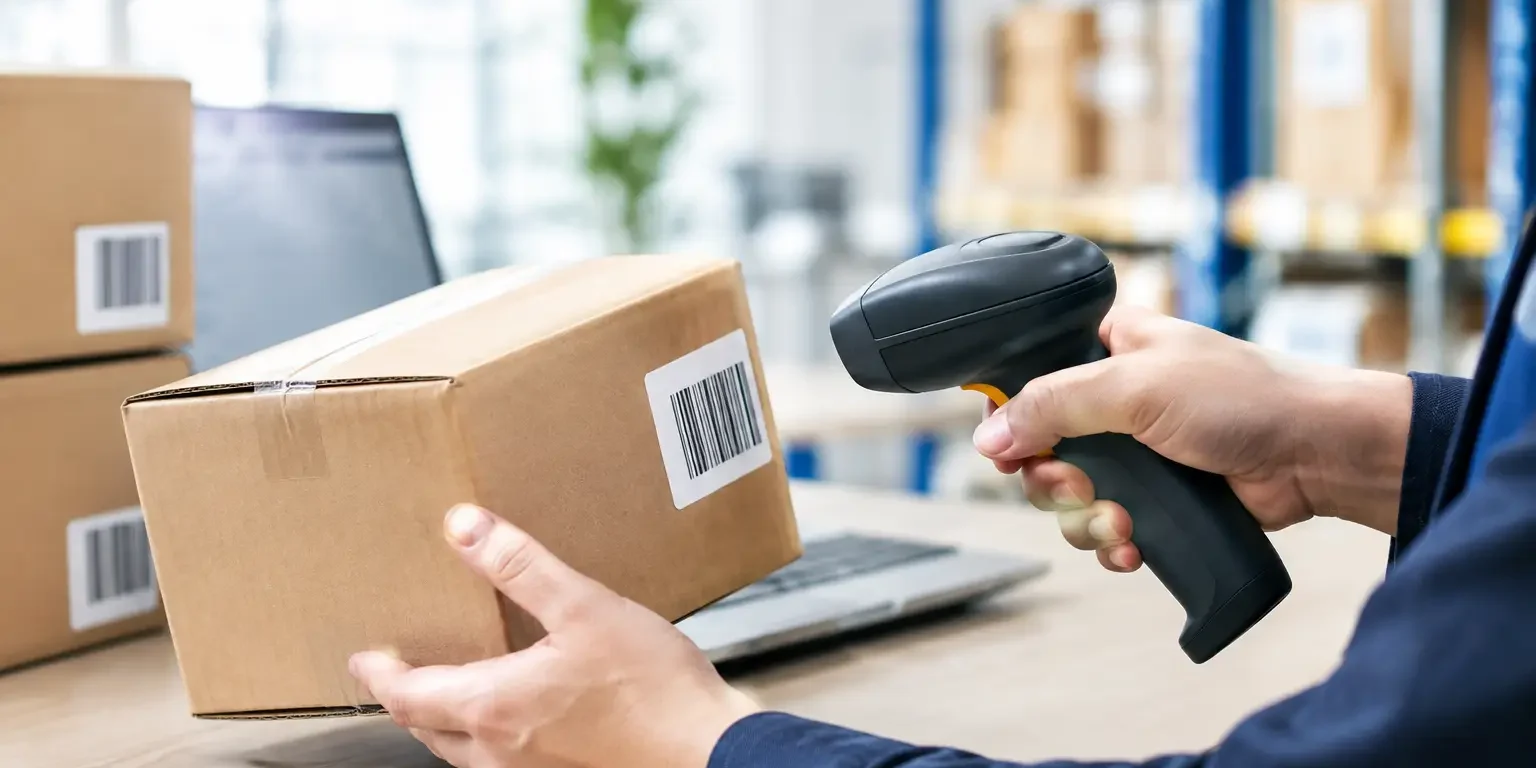
Adding a barcode allows the same serial number to be scanned quickly using a handheld scanner or compatible mobile device. Common barcode formats include Code 128, Code 39 and QR codes. The right choice depends on the system being used, the amount of data required and the scanning equipment already in place.
A Code 128 barcode is a practical option for many asset registers because it can encode letters and numbers in a compact format. A QR code can hold more information, such as an asset reference, web address or maintenance instruction, although more data is not always better. For straightforward inventory control, a unique serial number encoded as a barcode is often the clearest and most reliable arrangement.
It is worth checking your software requirements before ordering. A label manufacturer can print the code accurately, but the format must be one your system recognises. Supplying a numbering list or spreadsheet also helps prevent duplicate numbers and ensures the printed sequence matches your records.
Better numbering prevents confusion later
A serial number should be unique, readable and consistent. It does not need to be long to work well. In fact, excessively detailed numbering schemes can create problems when staff are expected to read or enter codes by hand.
A simple structure might include a site or department prefix followed by a sequence, such as GLAS-IT-000245. This can be useful for organisations with multiple premises. Others may prefer a straightforward consecutive number and keep all other information in the asset register. Neither approach is automatically better. The right option depends on how your team searches, scans and reports on assets.
Avoid using a number that can be reassigned after disposal. Once a serial number has been associated with an item, it should remain part of that item’s history. Reusing it can create confusion during audits, warranty claims or investigations into missing equipment.
Before production, check whether manufacturer serial numbers already exist and whether they should be recorded separately. Your own asset label number is normally an internal control reference. It should complement, rather than replace, the manufacturer’s identification.
Material choice affects whether the system works
A unique number is of limited value if the label fades, peels away or becomes unreadable after a few months. Material selection should reflect where the asset is used and how it is handled.
For indoor office equipment, durable polyester asset labels are commonly suitable. They provide a professional finish and can carry fine text, logos, barcodes and consecutive numbering. For equipment exposed to moisture, cleaning products, abrasion or outdoor conditions, a tougher material and adhesive may be needed.
Tamper-evident labels add another layer of control. Depending on the material, an attempted removal can leave a visible VOID message, break into pieces or show signs of interference. These are particularly useful on laptops, electrical equipment, stock held in restricted areas and items that should not be transferred without authorisation.
There is a trade-off. A highly aggressive adhesive or destructible material is excellent for discouraging removal, but it may not be appropriate for leased equipment, delicate surfaces or assets that are routinely refurbished. Share details of the surface, expected environment and intended lifespan before ordering. Practical advice at this stage avoids labels that look right but perform poorly in use.
How to introduce serialised labels without disruption
The easiest approach is usually to begin with the assets that are most valuable, mobile or frequently misplaced. IT equipment, tools, audiovisual equipment and specialist devices are often sensible priorities. Once the numbering process is established, it can be extended to lower-value items where tracking would still save time.
Set aside time to clean and dry surfaces before applying labels. Place each label where it can be scanned without dismantling the item, but avoid vents, safety warnings, moving parts and areas likely to receive heavy wear. Record the number immediately after application rather than leaving a pile of unlabelled records for later.
For larger rollouts, assign clear responsibilities. One person can apply labels while another verifies serial numbers and updates the register. This simple separation reduces transcription mistakes. It also creates an auditable process if several departments are involved.
Security-Label.co.uk can produce serialised asset and security labels with bespoke numbering, barcodes, QR codes, company details and tamper-evident materials, including smaller custom runs where a standard format is not suitable.
When serialisation may not be necessary
Not every label needs an individual number. General safety notices, cable markers, packaging labels and low-cost consumables are often better suited to standard labels. Serialisation adds value when an item needs to be individually identified, tracked, assigned or protected against unauthorised removal.
The key question is not simply what the asset cost to buy. Consider the cost of losing it, replacing it, locating it, proving ownership or being unable to complete a job because it is missing. A modestly priced tool can still justify a serialised label if it regularly moves between staff or sites.
A well-planned serialised label system does not need to be complicated. Choose a numbering format your team can maintain, pair it with the right barcode where scanning will help, and select a material that will remain legible for the life of the asset. That gives every labelled item a clear place in the records – and makes the next stock check far less dependent on guesswork.