
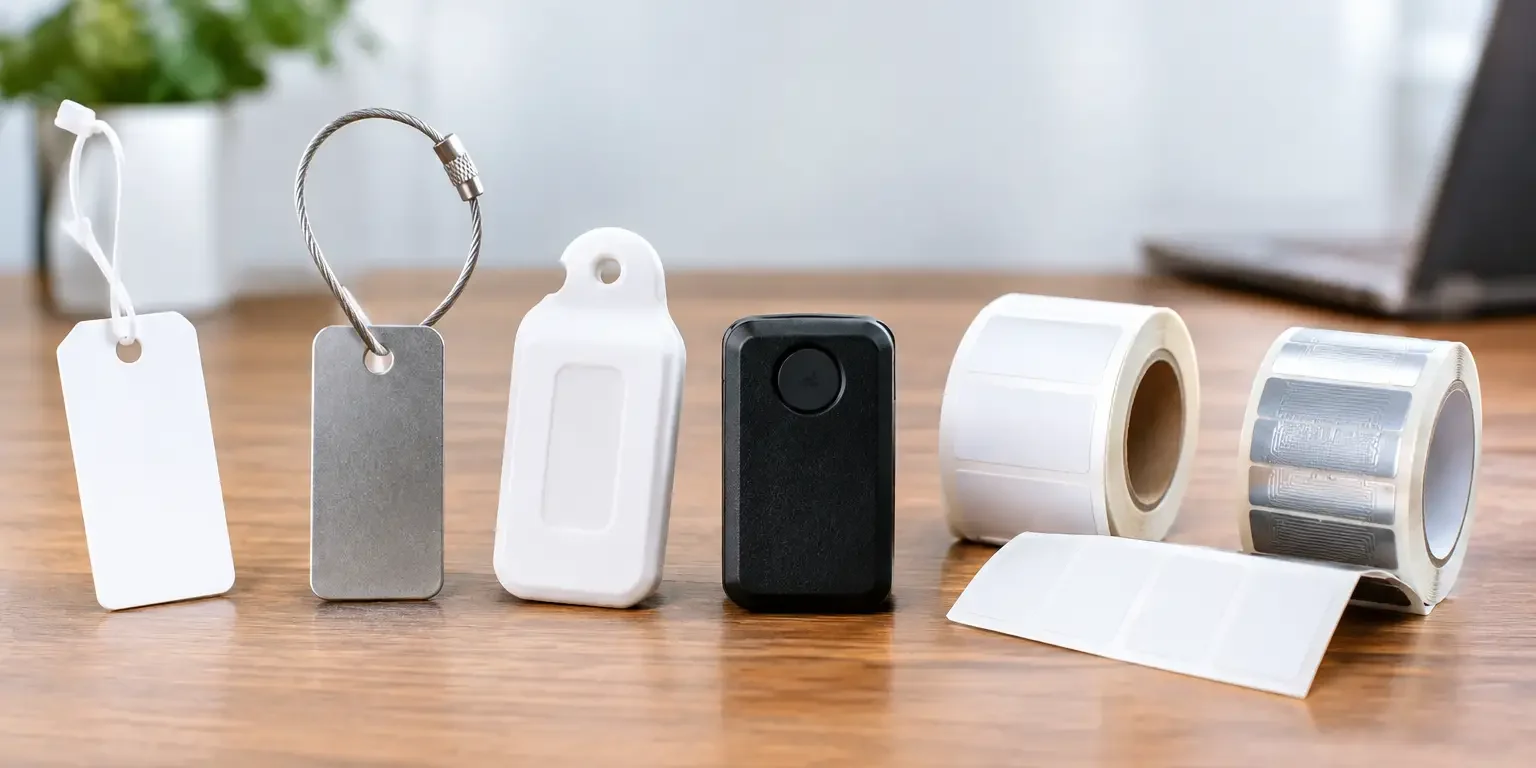
A label that lifts at the corners, smudges during cleaning or scans poorly at audit time does not protect an asset register. The right choice starts with a practical label material comparison: consider the surface, environment, expected service life and whether the label must show evidence of removal.
For UK organisations, this decision often affects more than identification. Asset labels can support insurance requirements, deter opportunistic theft, speed up stock checks and give facilities or IT teams a reliable way to match equipment to their records. The material needs to work as hard as the printed serial number, barcode or QR code.
Start with the job the label must do
Before choosing a material, establish whether the label is principally for identification, tracking, deterrence or tamper evidence. One label can perform several of these functions, but not every material is suited to every job.
A standard asset label on office equipment may need permanent adhesion, crisp barcode printing and resistance to normal handling. A seal on an electrical enclosure, calibration point or confidential document may need to leave a visible message when lifted. Equipment stored outdoors, in a warehouse or in a workshop may need greater resistance to moisture, abrasion, temperature changes and cleaning chemicals.
The surface matters just as much. Smooth powder-coated metal, glass and hard plastic are generally straightforward. Textured plastics, curved surfaces, low-energy plastics, damp surfaces and oily machinery need more careful material and adhesive selection. Applying an excellent label to a poorly prepared surface is still likely to cause failure.
Label material comparison: the main options
Polyester labels for long-term asset identification
Polyester is a dependable choice for many fixed asset labels. It is tough, stable and well suited to printing variable data such as asset numbers, barcodes, QR codes and company details. With the appropriate permanent adhesive, polyester labels adhere well to common office and industrial surfaces and stand up to regular handling.
This makes polyester a strong option for IT hardware, tools, furniture, AV equipment, laboratory equipment and plant-room assets. It is usually the sensible starting point where labels need to remain legible for years rather than months.
The trade-off is that standard polyester is not automatically tamper-evident. If someone removes it carefully, it may come away in one piece. For organisations that need visible evidence of interference, a specialist tamper-evident construction is normally the better choice.
Vinyl labels for flexibility and uneven surfaces
Vinyl is more flexible than polyester and can be useful where the label needs to follow a slight curve or conform to an uneven surface. It is often chosen for equipment with rounded housings, certain plastic containers and applications where flexibility is more valuable than rigidity.
A quality vinyl label can offer good durability, but performance depends on the specific film, adhesive and exposure conditions. It is not a blanket answer for every difficult surface. Some plastics contain additives or have low surface energy, making adhesion challenging regardless of the label material. Testing a sample on the actual item is prudent when applying labels across a large estate.
For straightforward indoor asset management, polyester may offer a firmer, more scratch-resistant finish. Vinyl earns its place when conformability is the priority.
Destructible labels for removal deterrence
Destructible vinyl is designed to break apart when removal is attempted. Once applied, the label cannot normally be lifted intact and reapplied to another item. That makes it a practical theft deterrent for laptops, portable equipment, tools and high-value devices.
Its main strength is obvious visual evidence. A missing or fragmented label raises a question immediately. It also helps prevent a genuine asset label from being transferred to unregistered equipment.
There are limits. Destructible labels need to be applied carefully to a clean, suitable surface, as their thin construction can be less forgiving during fitting. They are intended for single-use identification and are unsuitable where a label must be removed cleanly at the end of a hire period or refurbishment cycle.
Void labels for clear tamper evidence
Void labels use a different approach. When lifted, they reveal a hidden word or pattern, commonly “VOID”, on the surface, label or both. The result is clear evidence that a seal or label has been disturbed.
They are particularly useful for access panels, electrical cabinets, warranty protection, security cases, evidence bags and controlled equipment. A void label can also be printed with a unique serial number, barcode or QR code, allowing the seal itself to be recorded and checked.
Not every void construction behaves identically. Some leave a strong residue message, while others transfer less material. The required level of evidence should be agreed before ordering. Consider whether the label will be applied to a surface that must remain clean, and whether residue could create a maintenance issue when authorised access is required.
Metallic and foil-effect labels for visible deterrence
Metallic finishes, including aluminium-look labels and hologram labels, can make asset ownership more conspicuous. They create a professional, high-value appearance and are difficult to ignore during a casual inspection. Holographic security labels add a visual feature that is harder to reproduce than a basic printed label.
These materials are often selected for asset marking where deterrence and brand visibility are as valuable as tracking. They can be combined with serial numbering and barcode data, but readability must remain the first priority. A reflective background can affect scanning or human-readable contrast if the design is poorly specified.
Use metallic or holographic options where their security benefit justifies the extra visual impact. For a back-office asset register, a plain white polyester barcode label may be the more efficient choice.
Adhesive is part of the specification
A material name alone does not tell the full story. The adhesive determines whether the label stays in place, can be removed cleanly, or produces a tamper-evident result. Permanent adhesive is appropriate for most asset labels, while aggressive adhesives may be needed for difficult surfaces or demanding environments.
Surface preparation should be treated as part of the installation process. Remove dust, grease, polish and moisture, then allow the item to reach a sensible application temperature. Labels generally perform better when pressure is applied evenly across the whole face rather than only at the centre.
Allow time for the adhesive to develop its bond before putting the item through heavy use, cleaning or temperature changes. This is especially relevant when a large batch of labels is applied during a site move, IT refresh or stocktake.
Match print and barcode choices to the material
A durable label is of little use if the printed code cannot be read. Barcodes need sufficient contrast, a clear quiet zone around the code and a size that suits the scanner being used. Dense codes may look efficient on screen but can be less forgiving when printed small or scanned in poor light.
For most asset registers, a human-readable asset number alongside a barcode gives teams a practical fallback when a scanner is unavailable. QR codes can hold more information and work well with mobile devices, but they should not replace a clear serial number where staff need to identify an item quickly.
Laminate or protective overprint options can improve resistance to abrasion and cleaning. This is worth considering for labels on shared equipment, medical environments, warehouses and frequently handled tools. If labels will be exposed to solvents, oils, UV light or harsh washdown, specify this at the outset rather than assuming a standard construction will cope.
Choose for the full service life, not just the purchase price
The lowest-cost label can become expensive if it needs replacing across hundreds of assets, leaves outdated adhesive behind or causes missed scans during an audit. Conversely, a high-security construction may be unnecessary for low-risk furniture in a controlled office.
Think about what happens when the asset is moved, repaired, reassigned or disposed of. A durable polyester label may remain with the equipment throughout its working life. A void seal may need replacement every time authorised servicing takes place. That is not a weakness – it is the evidence that the seal has done its job.
For bespoke requirements, it is worth confirming the item surface, expected environment, label dimensions, data format and security objective before production. A short discussion at this stage can prevent an order of labels that look right but do not perform as required.
The best material is the one that remains attached, readable and fit for purpose when the asset is checked months or years later. Start with the real conditions on site, then specify the label to meet them.