
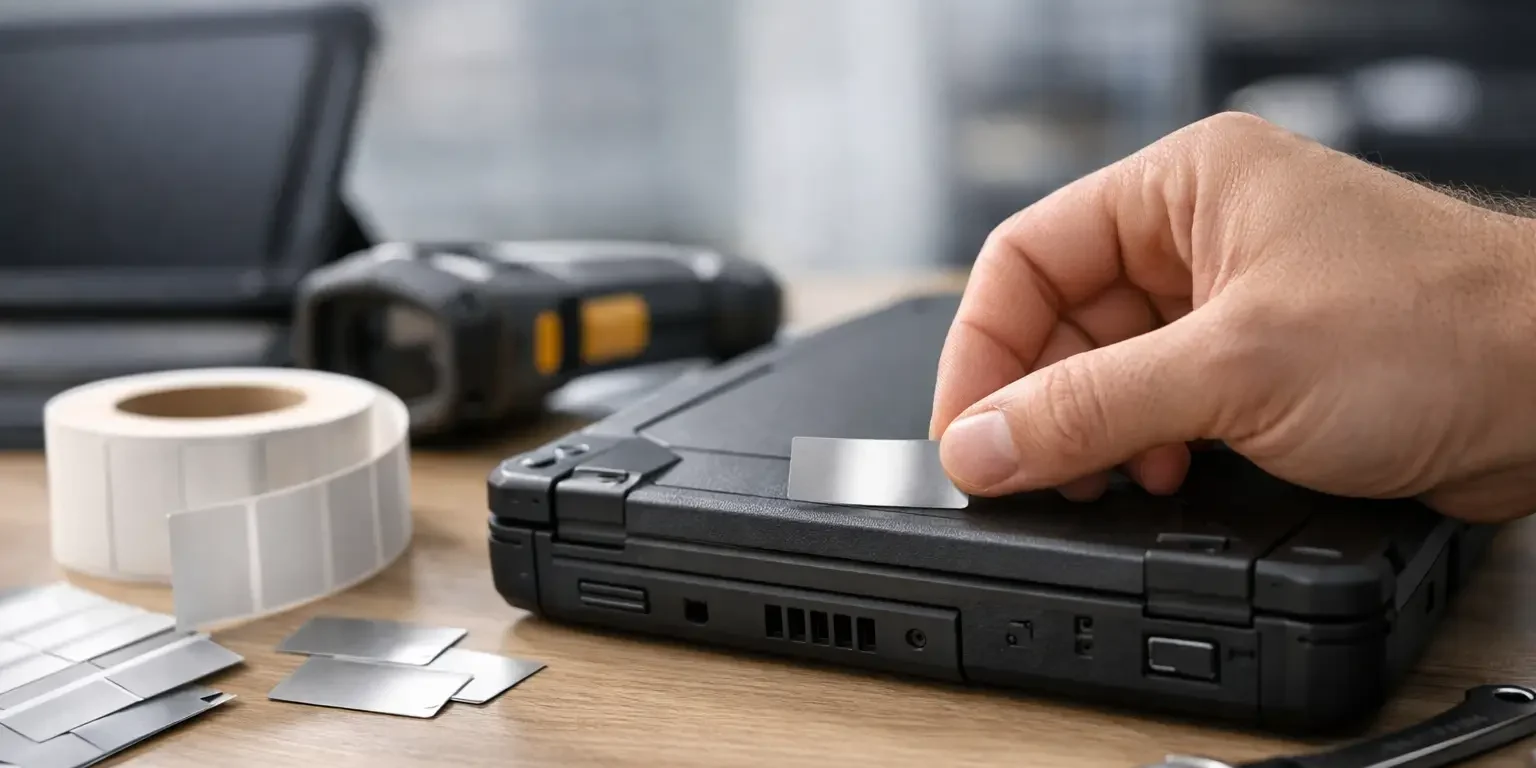
A label that peels off after six months is not just an annoyance. It breaks your audit trail, weakens theft deterrence and creates avoidable admin for the people trying to track equipment properly. If you are working out how to choose asset labels, the right starting point is not the artwork or even the price. It is the way your assets are used, handled and recorded day to day.
For most organisations, asset labels need to do three jobs at once. They must stay attached, remain readable and support the way you identify items in your register or stock system. Get those basics right and the label becomes a practical control measure rather than a box-ticking exercise.
How to choose asset labels for the job
The best asset label is the one that matches the surface, environment and purpose of the item it is applied to. A school lab laptop, a warehouse scanner and a council-owned power tool may all sit on the same asset register, but they do not need the same label specification.
Start with the asset itself. Smooth metal and coated plastic surfaces are usually straightforward, but textured plastic, powder-coated equipment and low-surface-energy materials can be more demanding. If adhesion is the weak point, even a well-printed label with the correct numbering will fail in service. This is why material and adhesive choice should be treated as a core buying decision, not an afterthought.
Then consider how the item is used. Office equipment generally needs a durable identification label with good print clarity and a permanent adhesive. Mobile devices, handheld equipment and frequently cleaned assets often need more abrasion resistance. Outdoor assets or equipment exposed to moisture, temperature shifts or chemicals need a tougher face material and adhesive system again.
Choose the label type before the design
Buyers often focus first on what information should appear on the label, but the construction matters more. There are broadly three common routes.
Standard asset labels suit routine identification and inventory control where the priority is clear numbering, company branding and dependable adhesion. These are suitable for deskside IT, furniture, classroom equipment and many internal assets.
Tamper-evident asset labels add a layer of security. If someone attempts to remove the label, it leaves evidence behind or breaks apart, making transfer difficult. This is the right choice where theft deterrence, unauthorised swapping or proof of interference matters. Schools, hospitals, local authorities and businesses with portable electronics often benefit from this option.
Highly durable specialist labels are used where conditions are harsher. If assets are exposed to oils, cleaning fluids, weather or rough handling, a more resilient construction is often worth the extra spend. A cheap label replaced twice is usually more expensive than a better one fitted once.
Think about what the label needs to prove
An asset label can simply identify an item, or it can help you prove ownership, link to a system record, discourage removal and support inspections. Knowing which of those matters most will narrow your options quickly.
If your main concern is audit accuracy, serial numbering is usually the first requirement. Unique numbers make spot checks faster and reduce confusion where several devices are the same make and model. If the label must support scanning, a barcode or QR code may be the better route.
If loss prevention matters, the wording and construction carry more weight. Labels that state property ownership and show clear signs of tampering tend to act as a visible deterrent. They do not replace physical security, but they support accountability and make casual asset switching less likely.
If you need integration with an internal asset management process, consistency matters more than visual complexity. A clean layout, standard numbering structure and the correct barcode format will serve you better than trying to fit too much onto a small label.
How to choose asset labels with the right data
The information on the label should be useful at the point of use. In practice, that means keeping it focused. Most organisations only need a few core fields such as company name, asset number and a barcode or QR code.
Too much text can reduce legibility, especially on smaller labels for laptops, tablets or handheld equipment. Fine print may look acceptable on screen but can become hard to read once printed and applied to a curved or slightly textured surface. It is usually better to keep the visible information simple and let your database hold the rest.
Serial numbers are still one of the most reliable options for fixed asset management. They are easy to reference in audits and straightforward for staff to read over the phone or in person. Barcodes speed up stock takes and reduce manual entry errors, but the barcode format should be selected to match the scanner and software already in use. QR codes are useful where you want to store more data or direct users to a digital record, though they are not always necessary for straightforward internal tracking.
Size, shape and readability matter more than many buyers expect
A common mistake is choosing the smallest label possible to keep it discreet. That can work for appearance, but only if the code still scans and the text remains readable. Labels that are too small can compromise both usability and print quality.
The right size depends on the asset and viewing distance. Desktop equipment can usually take a modest rectangular label without issue. Smaller electronics may need a compact format, but there still needs to be enough space for a clear asset number and any machine-readable code. For larger equipment, a slightly bigger label can improve visibility during inspections and routine checks.
Shape is mostly practical. Rectangles are efficient for numbering and barcodes. Smaller square formats can work for compact devices. The point is not to make the label decorative. It is to make sure it fits the asset properly and remains easy to locate.
Material and adhesive are where long-term value sits
This is often the deciding factor when buyers compare labels that appear similar on paper. The print may look equally sharp on day one, but long-term performance comes from the face material, adhesive and any protective finish.
Polyester labels are commonly chosen for asset identification because they offer good durability, clear print definition and strong resistance to wear in many internal environments. Vinyl can suit some curved or uneven surfaces. Tamper-evident constructions are designed specifically to prevent clean removal. Which is best depends on the surface and security requirement.
Adhesive performance depends on where the label is going. A label applied to smooth indoor equipment has different demands from one fixed to a tool case, a trolley or equipment that is regularly wiped down. If the asset is handled often, cleaned with chemicals or exposed to changing temperatures, it is worth specifying that at enquiry stage. A specialist manufacturer can then guide you towards a construction that is less likely to fail in service.
Do not overlook the application process
Even a well-made label can underperform if applied badly. Grease, dust, silicone residue and cold surfaces all affect adhesion. If labels are being fitted across multiple sites or by different teams, simple application guidance is worth having.
In most cases, surfaces should be clean, dry and free from polish or residue. Labels should be pressed down firmly, especially at the edges. If you are labelling a large estate of assets, consistency in where labels are placed also helps with future audits. Staff should know where to look rather than hunting around each item.
This matters particularly in schools, NHS settings, facilities teams and multi-site businesses where equipment is checked by different people over time. A clear labelling standard reduces friction later.
Cost matters, but replacement cost matters more
It is sensible to compare unit prices, especially for larger quantities, but the cheapest label is not always the most economical choice. A lower-cost label may be perfectly suitable for stable indoor use. On the other hand, if labels start lifting, fading or becoming unreadable, the replacement effort quickly outweighs the saving.
Think in terms of whole-life use. If a label needs to support assets for three to five years or longer, durability should be priced in from the start. For higher-risk items, tamper evidence may justify a slightly higher unit cost because it supports loss prevention and discourages unauthorised transfer.
This is where working with a specialist supplier helps. A manufacturer focused on asset and security labels will usually ask the practical questions general print firms miss, such as substrate, cleaning regime, barcode type and removal risk. That tends to save time and avoid false economy.
The right choice is usually the clearest one
If you are deciding how to choose asset labels, keep the brief simple. Match the label to the asset surface, the working environment and the level of security you actually need. Prioritise readability, adhesion and traceability over unnecessary design extras.
A good asset label should quietly do its job for years. When it stays put, scans cleanly and makes ownership obvious, the rest of your asset management process becomes much easier.