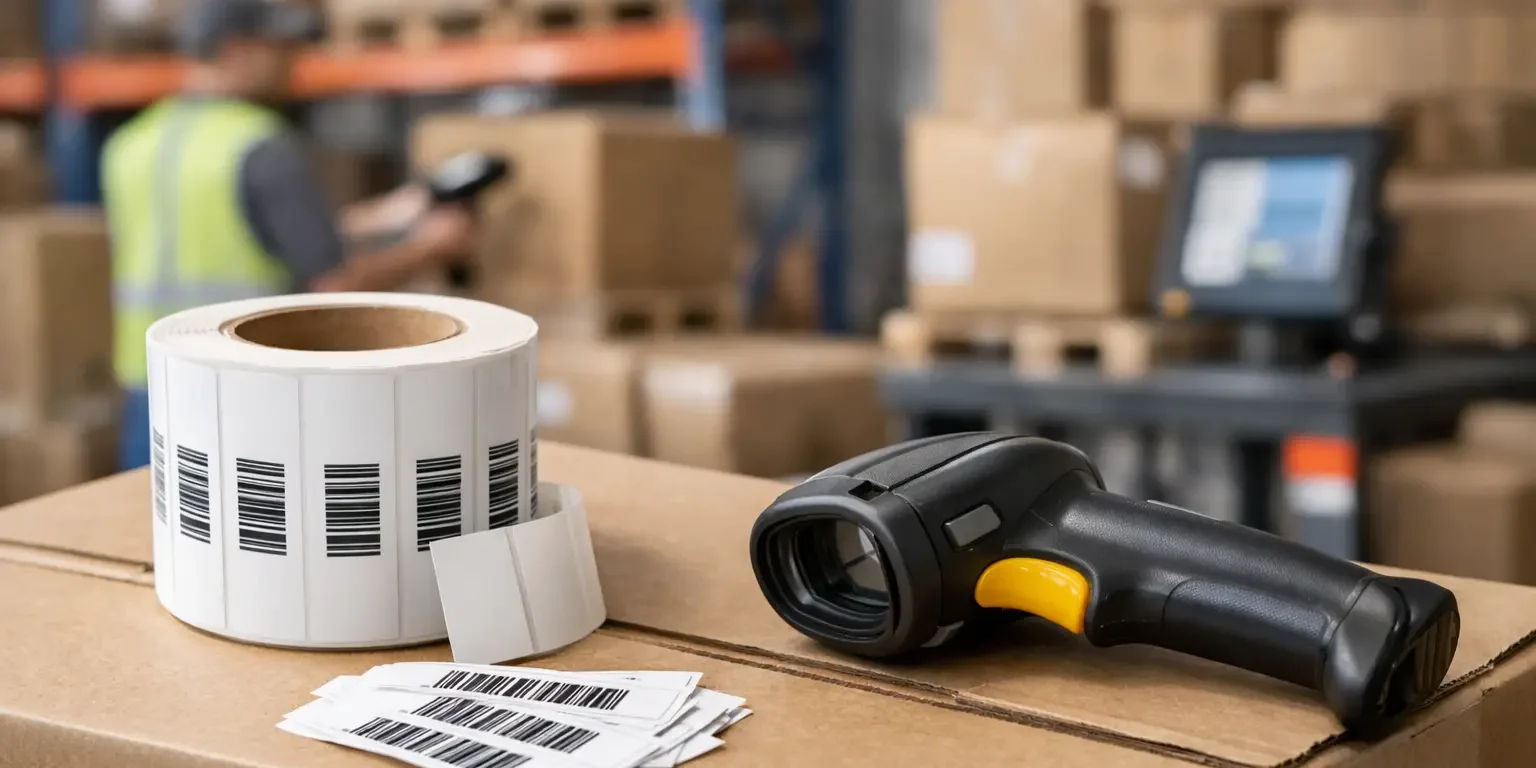
A barcode that scans perfectly on the day equipment is issued but peels away six months later is not an inventory solution. For organisations managing laptops, tools, laboratory equipment, school devices or warehouse stock, the best barcode labels for inventory are the ones that remain readable, firmly attached and matched to the way your team actually works.
The right choice depends on where the item is kept, how often it is handled, the surface it is applied to and whether the label also needs to deter removal or unauthorised transfer. A cheap paper label may suit short-term stock control. It is rarely the right answer for a five-year asset register.
What makes a barcode label suitable for inventory?
Inventory labels need to do two jobs consistently: identify the item and allow staff to capture that identity quickly. A clear printed asset number can be read by a person, while a barcode allows a scanner or mobile device to update records with fewer keying errors.
Durability is the first consideration. Labels on office furniture may face little more than cleaning and occasional handling. Labels on IT equipment, field tools or industrial machinery face abrasion, heat, moisture, cleaning fluids and regular contact. The material, adhesive and print method must be selected for those conditions rather than simply for the initial appearance of the label.
Scan reliability matters just as much. Bars and spaces need sufficient contrast, a clean quiet zone around the code and a size that suits the scanner being used. A barcode made too small to save space can cause repeated failed scans, slowing down stocktakes and making staff less likely to follow the process.
For fixed assets, a label should normally carry more than a barcode alone. Including a human-readable serial number, company name or asset reference gives users a way to identify equipment when a scanner is unavailable or a barcode has been damaged. For sensitive equipment, a clear ownership message can also act as a visible theft deterrent.
Best barcode labels for inventory by application
There is no single material that is best in every setting. Choosing by application is more reliable than choosing by price alone.
Polyester labels for everyday assets
Polyester is the standard choice for many long-life asset and inventory labels. It provides a professional finish, strong resistance to scuffs and moisture, and reliable adhesion on common smooth surfaces such as laptops, monitors, printers, cabinets and office equipment.
For schools, offices, healthcare settings and facilities teams, a white polyester label with a permanent adhesive is often the most cost-effective option. It gives enough space for a logo, barcode, serial number and contact details without adding unnecessary complexity. A laminated finish can provide extra protection where labels are cleaned frequently or handled heavily.
The limitation is surface preparation. Dust, oil, textured plastic and worn paint can reduce adhesion. Applying labels to a clean, dry surface and allowing the adhesive time to bond will prevent many avoidable failures.
Metalised labels for a premium, durable finish
Metalised polyester labels are well suited to higher-value equipment, engineering assets and items where a more permanent appearance is useful. They are commonly chosen for IT hardware, plant, machinery and equipment that may be inspected during audits.
Their main benefit is perception as well as performance. A metal-effect asset label is harder to overlook and signals that the item is recorded and controlled. Black barcode printing provides strong contrast against silver backgrounds when properly specified, but the barcode must be tested at the intended size. Highly reflective finishes can be less forgiving with some scanners than a matt white label.
Tamper-evident labels for controlled equipment
Tamper-evident barcode labels are appropriate where a standard permanent label does not provide enough protection. When someone attempts to remove the label, it may leave a visible residue, show a void message or break apart. This creates evidence that the asset identification has been interfered with.
They are especially useful for laptops, tablets, audiovisual equipment, medical devices, hired equipment and any asset that is vulnerable to theft or unauthorised reassignment. They also support internal accountability: a missing or disturbed label gives the team an immediate reason to check the asset record.
Tamper-evident materials involve a trade-off. They are designed not to be moved cleanly, so they are not suitable where labels must be regularly transferred between containers or reused equipment. The exact tamper effect should be selected with the asset surface in mind, as performance can vary between metal, plastic, powder-coated finishes and textured surfaces.
Paper labels for short-term stock and warehouse use
Paper barcode labels can be a sensible low-cost option for cartons, consumables, shelf locations and short-cycle stock. They print clearly and are economical where labels are replaced frequently.
They should not be confused with long-life asset labels. Paper is vulnerable to tearing, moisture and abrasion, and its adhesive performance is usually more limited. If stock is kept in cold stores, damp areas or external locations, synthetic materials are a safer choice.
Choose the right barcode format
The barcode format should fit the software and scanning equipment already in use. Replacing a working system to accommodate a label is rarely necessary.
Code 128 is a common choice for internal inventory because it can encode letters, numbers and other characters efficiently. It works well for asset references such as IT-004582 or SCHOOL-LAB-128. Code 39 remains widely used in older systems and is straightforward, although it generally takes up more label space for the same data.
EAN barcodes are intended primarily for retail products and should only be used where product identification follows a recognised retail numbering system. QR codes can hold more data and can be scanned by many smartphones, making them useful for linking an asset to a digital record, service history or inspection form. However, QR codes are not automatically better for a traditional asset register. If your existing handheld scanners and software expect a linear barcode, Code 128 may be the more practical option.
Where possible, include the asset number in readable text below the code. It provides a useful fallback during audits and lets staff confirm that they have scanned the correct item.
Size, layout and print quality
A small label can be durable but still fail operationally if the barcode is cramped. The available label size should be driven by the amount of information required and the expected scanning distance. A barcode scanned close up with a mobile device can be smaller than one scanned from a trolley or across a storeroom.
Avoid placing the barcode right against a logo, border or block of text. The clear area around the code is part of its function, not wasted space. Black bars on a white or light matt background generally give the most dependable results. Colour branding can be included, but it should not reduce contrast or interfere with the scanning area.
Variable data printing is valuable for inventory control. Sequential serial numbers, unique barcodes and department references can be produced as part of one ordered batch, reducing the risk of manual numbering errors. Before full production, it is sensible to check a proof against your asset register format and test a sample with the scanner or app your team uses.
Questions to ask before ordering
A clear specification prevents costly reorders. Before selecting labels, establish four practical points:
- What surface will the labels be applied to, and is it smooth, textured, curved, painted or regularly cleaned?
- How long must the identification remain in place, and will the item be exposed to heat, moisture, outdoor use or abrasion?
- Which barcode format does the inventory software accept, and what scanner will staff use?
- Does the label need to show evidence of removal, carry a logo, include sequential numbers or display a contact message?
These answers determine whether a standard polyester barcode label is sufficient or whether a bespoke tamper-evident construction is the better investment.
A practical approach to ordering inventory labels
Start with the asset register, not the label design. Confirm the identifier structure, whether numbers need prefixes for sites or departments, and whether every item requires a unique code. Then decide what staff need to see at a glance: usually an asset number, your organisation name and perhaps a return instruction.
For organisations with mixed assets, more than one label type may be the right answer. A permanent polyester label may suit monitors and furniture, while tamper-evident labels protect portable devices and lower-cost paper labels identify storage locations. Standardising the barcode format across those labels can still keep scanning simple.
Security-Label.co.uk produces UK-made barcode and asset labels with bespoke sizing, sequential numbering, logos and tamper-evident options, helping organisations order only what their inventory process requires. A short discussion about surfaces, scanners and expected label life is usually more valuable than choosing a material from a photograph.
A dependable inventory label does not need to be complicated. It needs to scan first time, stay where it is applied and give your team a clear route back to the correct asset record when it matters.