
A seal that looks fine at first glance can still leave you exposed. If someone can open a box, casing or cabinet and close it again without leaving a trace, you have no reliable way to prove interference. That is exactly where the question of what is tamper evidence matters – it gives you a visible sign that something has been opened, lifted, removed or altered.
What is tamper evidence in practice?
Tamper evidence is any feature built into a label, seal or closure that shows clear signs of interference once someone tries to remove, open or reposition it. The purpose is not necessarily to stop access completely. The purpose is to make unauthorised access obvious.
That distinction matters. A tamper-evident label is different from a high-security lock or physical barrier. It tells you that an item has been disturbed. In many operational settings, that is exactly what teams need. If an IT manager wants to know whether a laptop has been opened, or a facilities team needs to see if a meter box has been accessed, visible evidence can be more useful than a standard label that simply peels away cleanly.
The best tamper-evident products leave a trace that cannot be hidden easily. That may be a hidden message such as VOID appearing on the surface, a destructible face material that breaks into fragments, or an adhesive pattern that shows the label has been lifted. Once disturbed, the label cannot usually be reapplied in its original condition.
Why tamper evidence matters for organisations
For most organisations, the issue is not abstract security. It is accountability. If equipment goes missing, if a device has been opened, or if stock has been interfered with, you need a straightforward way to identify that something happened.
Tamper evidence helps in several practical ways. It discourages casual interference because people know signs will be left behind. It supports investigations because teams can see whether access took place. It also strengthens routine asset control by making it easier to spot exceptions during inspections, audits and handovers.
Schools, NHS departments, offices, warehouses and local authorities often manage a wide mix of assets across multiple rooms and users. In that environment, labels and seals need to do more than identify an item. They need to support procedures around responsibility, maintenance and restricted access.
There is also a compliance and insurance angle. In some settings, being able to demonstrate that equipment or packaging shows visible signs of interference is useful for audit trails, incident reporting and internal control. It will not replace a broader security process, but it can add a clear, low-cost layer of evidence.
How tamper-evident labels and seals work
Different tamper-evident constructions work in different ways, and choosing the right one depends on the surface, environment and the level of evidence required.
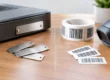
A common option is the destructible label. This material is designed to break apart when removal is attempted. Instead of peeling off in one piece, it fractures into small sections, making transfer or reuse impractical. This is often a good fit for asset tags on electronics, tools and office equipment.
Another option is a void label. These labels reveal a message, pattern or residue when someone lifts them. The message may appear on the label itself, on the surface beneath it, or both. That makes tampering immediately visible and can be useful where you want a clean and recognisable warning.
Tamper-evident seals can also be used across openings, joins or access points. Think of cabinets, enclosures, cartons, sample packs or meter housings. If the seal bridges an opening, any access attempt will break or compromise it.
What matters most is that the evidence is obvious and difficult to disguise. A label that curls at the edges in normal use is not helpful. A proper tamper-evident construction should react to deliberate interference, not day-to-day handling alone.
What tamper evidence does and does not do
This is where buyers need a realistic view. Tamper evidence does not mean tamper-proof.
A tamper-evident label is there to indicate interference, not to make access impossible. If someone is determined and has time, many items can still be opened or damaged. The label gives you visible proof that this has happened. That is why tamper-evident products work best as part of a wider control process rather than as a stand-alone fix.
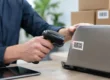
For example, on a laptop fleet, a destructible asset label can discourage removal and help identify if a device has been relabelled or opened. On its own, though, it will not stop theft. Combined with an asset register, serial numbering, barcode scanning and regular checks, it becomes far more valuable.
The same applies to packaging and storage. A seal across a box flap can reveal opening, but it needs to sit within a process for receiving, inspection and sign-off. If nobody checks the seal, the evidence is wasted.
Where tamper evidence is commonly used
The most common use cases are straightforward. Organisations use tamper-evident labels on IT equipment, AV assets, mobile devices, medical equipment, handheld tools and testing instruments. In these cases, the goal is usually to show attempted removal, support asset identification and deter swapping or relabelling.
Tamper-evident seals are also widely used on cabinets, electrical panels, access hatches, fire and safety equipment, ballot boxes, evidence bags, product packaging and warranty applications. Some businesses apply them to components where access should be limited to authorised technicians. Others use them to protect stock or cartons in transit.
Warranties are a useful example. A warranty seal over a screw point or casing join gives a service team a quick visual check. If the seal has been broken, they know the unit has been opened. That does not automatically answer every question about fault or liability, but it gives a clear starting point.
Choosing the right tamper-evident label
If you are selecting a tamper-evident product, the best choice depends on use rather than just appearance. Surface type matters first. A label that performs well on powder-coated metal may behave differently on textured plastic or low-energy surfaces. Adhesive choice and face material need to match the application.
Environment matters as well. Heat, moisture, cleaning chemicals, abrasion and outdoor exposure can all affect performance. A label used in a server room has different demands from one used on plant equipment or external housing.
You also need to think about what sort of evidence is most useful. A destructible label is effective where complete removal is the main concern. A void label may be better where you want an immediate visual message. If tracking is part of the requirement, adding serial numbers, barcodes or QR codes can turn a security label into a more useful control tool.
Print quality should not be overlooked either. If labels carry asset numbers, department names or barcodes, those details need to remain legible for the life of the item. There is no value in a tamper-evident feature if the identification itself fades too quickly or cannot be scanned.
That is one reason specialist advice makes a difference. A supplier focused on security and asset labels can usually steer you towards a material and construction that suits the real operating conditions, rather than a generic label that looks right on screen but fails in use.
What is tamper evidence worth to your process?
The direct cost of tamper-evident labels is usually modest. The real value comes from reducing doubt.
When labels show clear evidence of removal or access, your team spends less time guessing what happened. Asset audits become simpler. Handovers become cleaner. Loss prevention improves because opportunistic behaviour is less attractive when interference will be visible.
For procurement teams, that often means a better return than the label price alone suggests. A relatively small spend can support stock control, internal discipline, warranty management and incident investigation across a large number of assets.
If your current labels only identify an item but do nothing when lifted or swapped, there is a gap between identification and security. Tamper evidence closes part of that gap without adding complexity to everyday operations.
Security-Label.co.uk works with organisations that need exactly that balance – clear evidence, durable print, practical custom options and a straightforward UK supply process.
A good tamper-evident label does not need to be dramatic. It just needs to leave no doubt when something has been disturbed, and that certainty is often what keeps an asset system credible.