
A missing laptop, opened meter enclosure or swapped piece of test equipment can create far more work than the value of the item suggests. The right security label gives staff a visible control at the point where it matters. When comparing hologram labels vs void labels, the key question is whether you need to prove authenticity, show physical interference, or achieve both.
Hologram labels and void labels are often grouped together because both deter theft and unauthorised handling. They do different jobs, however. Selecting on appearance alone can leave a gap in an asset-control process, particularly where equipment moves between sites, departments or users.
Hologram labels vs void labels: the practical difference
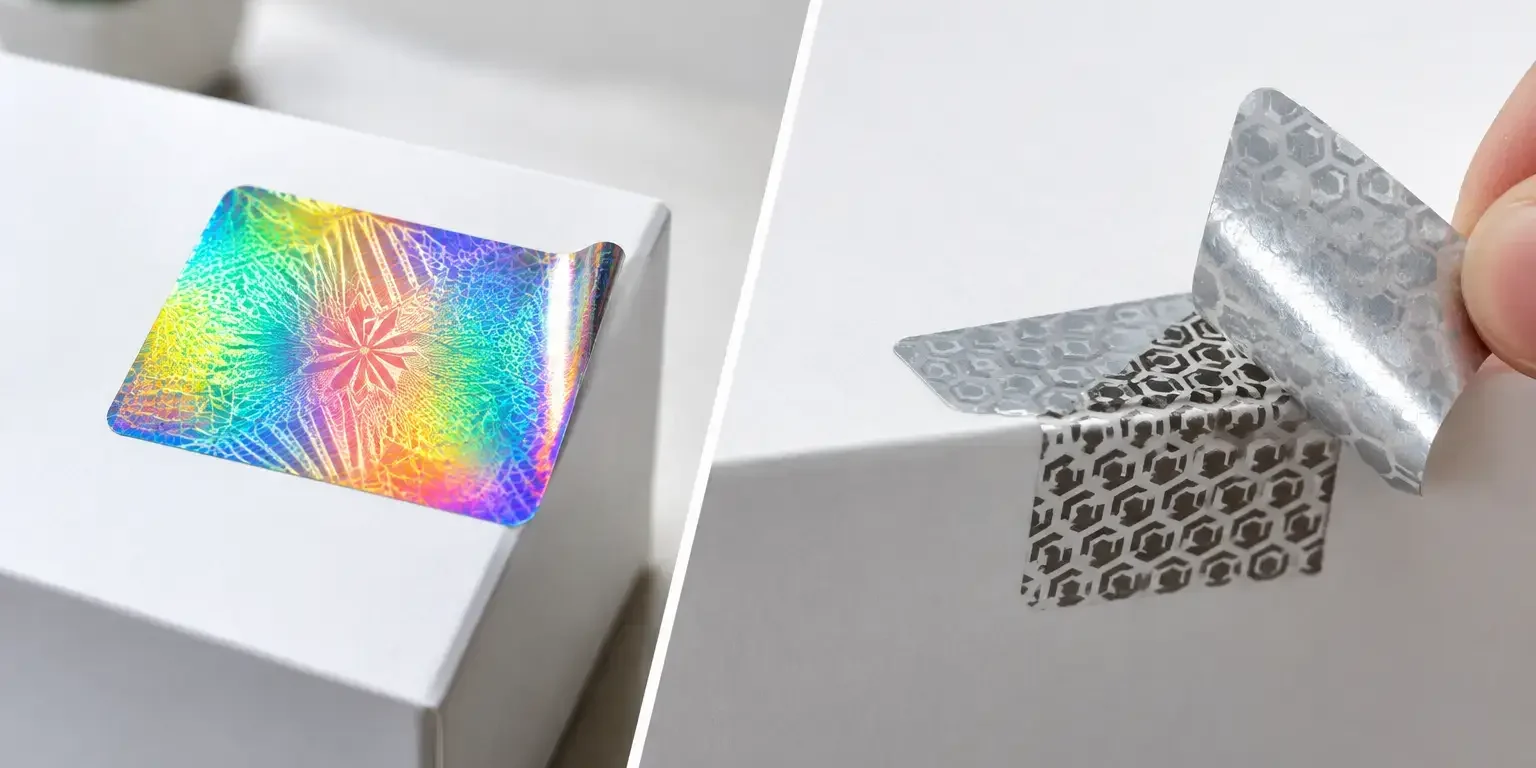
A hologram label uses a light-reflective image or pattern that changes appearance when viewed from different angles. Its purpose is primarily authentication and visible deterrence. A bespoke hologram can incorporate a company name, logo, serial number or design feature that is difficult for an opportunist to reproduce convincingly.
A void label is a tamper-evident seal. When someone attempts to lift or remove it, the label reveals a hidden message such as VOID, OPENED or a custom warning. Depending on the material, the message may remain on the surface, within the label itself, or both. Its purpose is to make interference obvious rather than to stop removal completely.
That distinction matters. A hologram label can make an item recognisable as owned and protected, but a standard hologram does not necessarily leave evidence when removed. A void label provides clear evidence of removal, but it may not carry the same immediate anti-counterfeit value as a holographic design.
When hologram labels are the better choice
Hologram labels work well where ownership needs to be obvious at a glance and where imitation or substitution is a concern. They are commonly used on IT equipment, tools, electronics, branded products, warranty items and high-value portable assets.
The shifting holographic effect catches the eye. This makes it useful as a theft deterrent on devices that could otherwise be resold easily. A visible branded hologram tells a potential buyer that the item may be traceable, marked and difficult to pass off as unowned.
For asset management, hologram labels can be printed or combined with variable information such as consecutive serial numbers, barcodes and QR codes. The visual security feature then supports day-to-day identification, while the unique number connects the asset to the register. This is particularly useful for organisations managing large estates of laptops, AV equipment, scientific instruments or maintenance tools.
Holograms are also a strong option when staff need a quick authenticity check. For example, a facilities team may use a distinctive holographic label to identify approved equipment, while a school can mark devices issued to a particular department. The label does not replace an asset register, but it helps people spot a problem before it becomes a loss.
There are limits. Basic off-the-shelf holographic material offers a visible security cue, but it is not the same as a fully bespoke anti-counterfeit hologram. Where counterfeit resistance is the main requirement, design complexity, controlled artwork and the risk profile of the product all need careful consideration.
When void labels are the better choice
Void labels are designed for situations where a seal must show whether it has been disturbed. They are a practical choice for access panels, electrical cabinets, calibration points, cases, packaging, returnable containers and equipment with parts that should not be opened without authority.
Once a void label has been broken, the evidence is immediate. A manager does not need to compare a serial number or inspect a tiny design detail. The revealed message indicates that the seal needs investigation. This helps create accountability around maintenance, warranty controls and restricted access.
For IT departments, void labels can be placed over laptop access points, hard-drive bays or device casings where appropriate. For engineering and facilities teams, they can identify unauthorised entry to control boxes or safety-critical enclosures. The label provides evidence, not a physical lock, so it should sit alongside suitable locks, procedures and access controls.
Surface preparation is important. Dust, oil, textured plastic, damp conditions and very low temperatures can affect adhesion. Likewise, the result after removal varies by material and surface. A label that leaves a clear residue on powder-coated metal may behave differently on rough plastic or cardboard. Testing a sample on the intended substrate is sensible before committing to a large order.
Void labels can also carry variable data. Adding a unique serial number, barcode or QR code means a broken seal can be recorded against a specific asset, location or maintenance event. That turns a simple visual warning into a useful part of an audit trail.
Which label suits your application?
The answer depends on the risk you are trying to reduce. If the main concern is theft, loss or unauthorised resale, a hologram asset label usually offers the stronger visible deterrent. If the concern is whether someone has opened, removed or interfered with an item, a void label is usually the more direct solution.
Think about what staff need to establish during an inspection. If they need to know, “Is this our equipment?”, a hologram with a logo and unique asset number is highly effective. If they need to know, “Has this panel been opened?”, a void seal gives a clearer answer. If both questions matter, use both functions together.
A combined approach is common for higher-risk assets. A holographic asset label on the main body of a device identifies ownership and supports scanning. A separate void seal across an access point highlights unauthorised entry. Keeping these roles separate can be more reliable than expecting one label to provide every security benefit.
Factors to check before ordering
The best label is one that remains readable, securely attached and suitable for the way the asset is used. Before specifying a label, consider these practical points:
- Surface and environment: Smooth painted metal, textured plastic, cardboard and curved housings can require different adhesives. Consider heat, cold, cleaning chemicals, moisture and outdoor exposure.
- Expected lifespan: A short-term packaging seal and a five-year asset label require different materials. Permanent identification needs resistance to abrasion, fading and routine cleaning.
- Data requirements: Decide whether the label needs a logo, asset number, barcode, QR code, department name or contact details. Barcode size and contrast should suit the scanner being used.
- Tamper evidence required: Specify whether the void message should remain on the surface, appear in the label, or provide a combination of both.
- Label position: Avoid vents, seams, heavily handled edges and areas likely to be rubbed by bags, cables or protective cases. Place the label where it can be scanned and inspected without dismantling equipment.
It is also worth considering who will apply the labels. A highly detailed label layout is of little use if installers cannot align it consistently or if serial numbers are not recorded at the time of application. A simple process for scanning, assigning and checking labels usually delivers more value than adding unnecessary design features.
Getting the most from security labels
Security labels work best when they support a wider asset-control routine. Record the serial number and location when each label is applied. Link barcodes or QR codes to the correct asset record. Carry out periodic checks, especially for portable equipment, shared tools and stock held across multiple sites.
For tamper seals, define what happens when a void message is visible. Staff should know whether to report it, isolate the item, photograph the seal or arrange an inspection. Without a clear response, tamper evidence can be noticed but not acted upon.
Security-Label.co.uk can produce bespoke hologram and tamper-evident labels with variable numbering, barcodes and custom layouts, helping organisations match the label to their equipment, process and budget. UK-based production also makes it easier to discuss samples, quantities and turnaround before an order is placed.
The sensible choice is not the label with the most impressive finish. It is the one that gives your team a clear, usable signal when an asset is missing, moved, opened or questioned.