
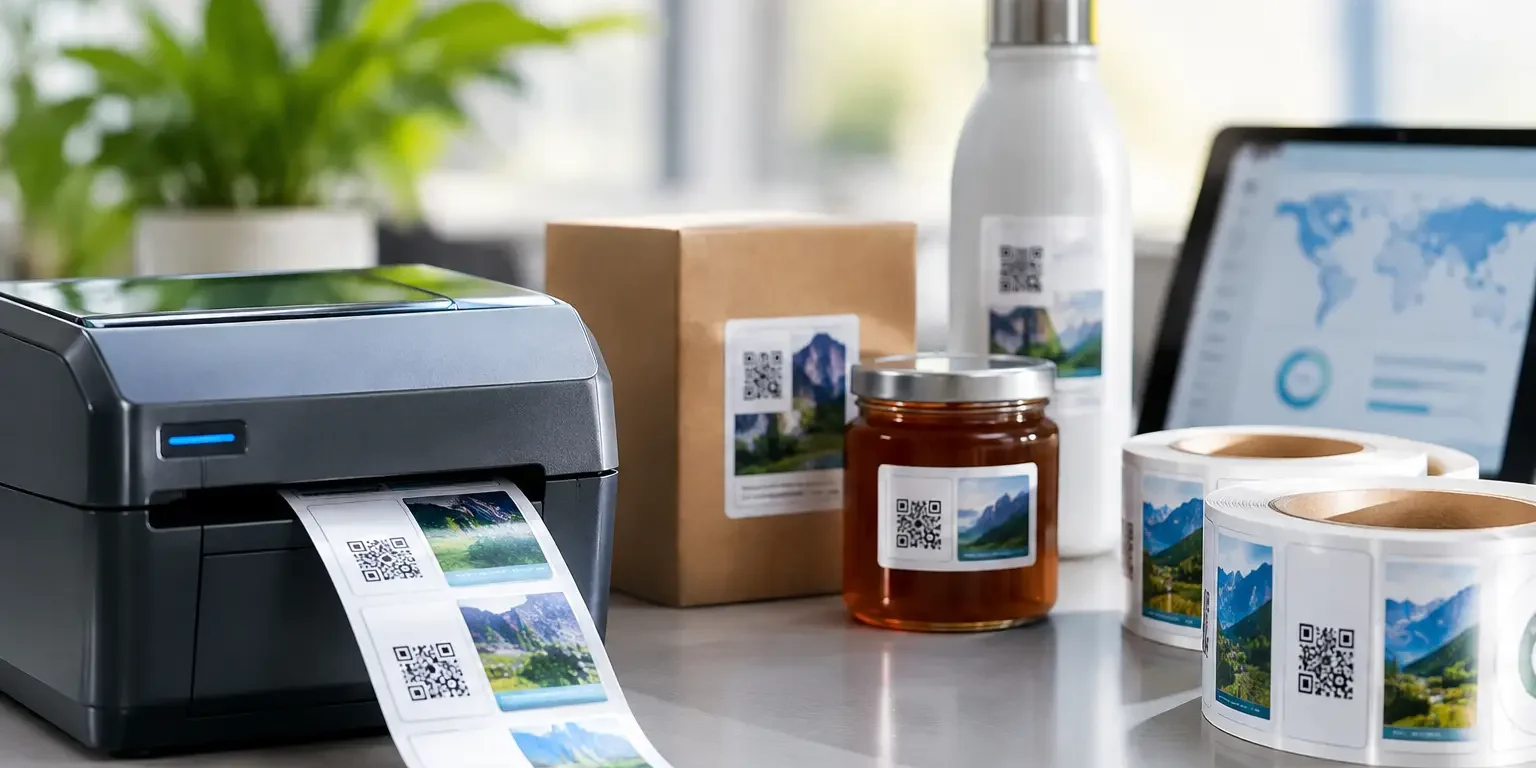
A missing laptop, an unrecorded tool transfer or a broken seal can create far more work than the value of the item involved. The smart label printing future is not about adding technology for its own sake. For organisations managing physical assets, it is about making every label easier to identify, harder to remove without evidence and more useful within the systems already used for stock, maintenance and audit.
For most UK organisations, the immediate future will not be a wholesale move from printed labels to expensive electronic tags. It will be a more practical combination of durable materials, variable data, scannable codes and tamper-evident features. The right solution depends on what needs protecting, how often it moves and what information staff need at the point of use.
The smart label printing future is practical, not theoretical
A smart label is often described as a label containing technology that can store, communicate or reveal information. That can include a barcode, QR code, RFID inlay, NFC chip, serial number or tamper-evident construction. In an asset management setting, the useful question is simpler: can the label help a member of staff identify the item, check its status and spot unauthorised interference quickly?
Barcodes remain central because they are affordable, proven and compatible with a wide range of scanners and asset management platforms. A sequential serial number gives every item a unique identity. A QR code can direct an authorised user to a maintenance record, user instructions or an internal asset page when scanned with a mobile phone.
RFID and NFC have a place, particularly where organisations need rapid stock checks, contactless identification or automated movement records. However, they require suitable readers, software and processes. A basic barcode label that is scanned consistently is more valuable than an RFID programme that staff cannot support. Technology should reduce friction, not create another project for an already busy facilities or IT team.
Better data starts at the print stage
Smart label printing is becoming more closely tied to the quality of asset data. A label is often the physical connection between an item on a spreadsheet or database and the equipment sitting in a classroom, office, depot or plant room. If the printed information is unclear, duplicated or poorly matched to the system, the register soon becomes unreliable.
Variable-data printing makes it possible to produce a batch of labels where every label has its own serial number, barcode or QR code. This reduces manual marking and gives organisations a controlled numbering sequence from the outset. It also supports more useful layouts, such as a company name and asset number on the main face, with a barcode positioned for quick scanning.
The barcode format needs to suit the intended system. Code 128 is commonly used for alphanumeric asset numbers because it is compact and versatile. QR codes can hold more information and are easy to scan with many mobile devices. Neither format is automatically better. A small IT asset may need a compact Code 128 barcode, while a field-service item may benefit from a QR code linked to a current inspection record.
Print quality matters as much as code choice. A code that is too small, poorly contrasted, scratched or printed on the wrong surface may not scan reliably. That is why label size, quiet space around the barcode, material finish and expected handling conditions should be considered before ordering.
Security features will become more targeted
The future of smart labels is also physical. Digital information helps organisations track an asset, but it does not necessarily deter theft or show that equipment has been opened. Tamper-evident labels address a different and equally important requirement.
A destructible vinyl label breaks into small pieces when removal is attempted. A void label leaves a visible message on the item and often on the removed label itself. These constructions can make unauthorised removal obvious, discourage opportunistic resale and give managers a clear visual check during inspections.
The best choice depends on the surface and the required evidence. Destructible labels work well where a permanent, difficult-to-remove mark is needed. Void labels are useful where evidence of opening or removal matters, such as on computer cases, electrical enclosures, cabinets and security seals. Neither should be selected on appearance alone. Surface texture, paint finish, cleaning chemicals, heat and outdoor exposure all affect adhesion and performance.
Future label specifications are likely to combine these features more often. A tamper-evident seal may include a unique serial number and QR code. An asset label may carry a barcode for daily scanning plus a holographic element for rapid visual authentication. This layered approach is particularly useful where an asset has financial value, sensitive data or a higher risk of unauthorised transfer.
Four developments worth planning for
Not every new label technology will be relevant to every organisation. These four developments are likely to have the most practical impact on asset control and security.
- Mobile-first scanning: QR codes and camera-based scanners will make it easier for staff to check assets during site walks, handovers and maintenance visits without carrying specialist hardware.
- More connected asset records: Labels will increasingly point users towards live internal records rather than static spreadsheets, improving the visibility of ownership, condition and service history.
- Higher use of tamper evidence: Organisations will combine identification labels with security seals where proof of interference is required, especially for IT equipment and controlled access points.
- More durable bespoke constructions: Better matching of adhesive, face material and laminate will help labels remain readable through cleaning, handling, temperature change and long service lives.
These changes do not remove the need for a sound asset policy. They make a good policy easier to carry out. An asset register still needs a named owner, a clear process for transfers and a scheduled check of high-value equipment.
What buyers should specify before ordering
The most effective label projects start with a clear use case rather than a preferred product. A facilities manager may need labels that survive routine cleaning and support annual audits. An IT manager may need tamper evidence on laptops and monitors, with barcodes that work with an existing service desk platform. A school may need affordable sequentially numbered labels that can be applied across a mixed estate of tablets, musical equipment and workshop tools.
Before production, confirm what the label will be applied to, including whether the surface is smooth, curved, textured, painted or likely to be cleaned. Consider the size of the available application area and the viewing distance. A label that looks clear on a screen may be too small to read in a store cupboard or too large for a compact device.
Also decide which information must be visible without scanning. A company name, “Property of” wording, contact number or asset number can support recovery even when a scanner is unavailable. The barcode or QR code should then support the internal record rather than replace all visible identification.
For security-sensitive applications, consider whether the label should show attempted removal, deter counterfeiting or both. Holograms provide a recognisable visual feature, while void and destructible materials provide physical evidence of interference. There is a cost difference, but the relevant comparison is not simply label price. It is the likely cost of replacing an asset, investigating a discrepancy or failing an audit.
The limits of smart labels
A smart label cannot correct inaccurate source data. If an item is assigned to the wrong person or is not scanned when it moves, the system will still contain errors. Similarly, a QR code linked to an online record needs access controls. Publicly readable codes should not expose sensitive asset details, user names or location information.
RFID also has trade-offs. Metal surfaces, liquids, tag orientation and reader placement can affect performance. A site-wide RFID installation may be justified for high-volume stock or frequent movement, but it is not automatically the best answer for a modest fixed-asset register. Many organisations will gain faster results by improving label durability, serial-number control and scanning discipline first.
There is also a sustainability consideration. Labels should last for the required service life, but over-specifying materials can add unnecessary cost and waste. A short-term warehouse location label has different needs from a five-year asset label on a regularly cleaned laptop. Matching the construction to the job is the sensible approach.
Build for the process your staff will actually follow
The strongest label system is one that works on a busy Monday morning, not just during an audit. Staff should be able to find the code, scan it, understand the result and know what to do if an item is moved, damaged or missing. Consistent positioning helps. So does a layout that keeps essential information readable when the item is stacked, mounted or stored.
Security-Label.co.uk produces bespoke asset and security labels in the UK, including sequential numbering, barcodes, QR codes, holograms and tamper-evident materials. The value of that specialist approach is being able to match the label to the asset, surface and workflow rather than forcing every requirement into one standard format.
Start with a small representative batch if the application is unusual. Test adhesion, scan performance and visibility in the real environment, then use what works as the standard for future orders. That simple step will do more for long-term control than choosing technology because it sounds clever.