
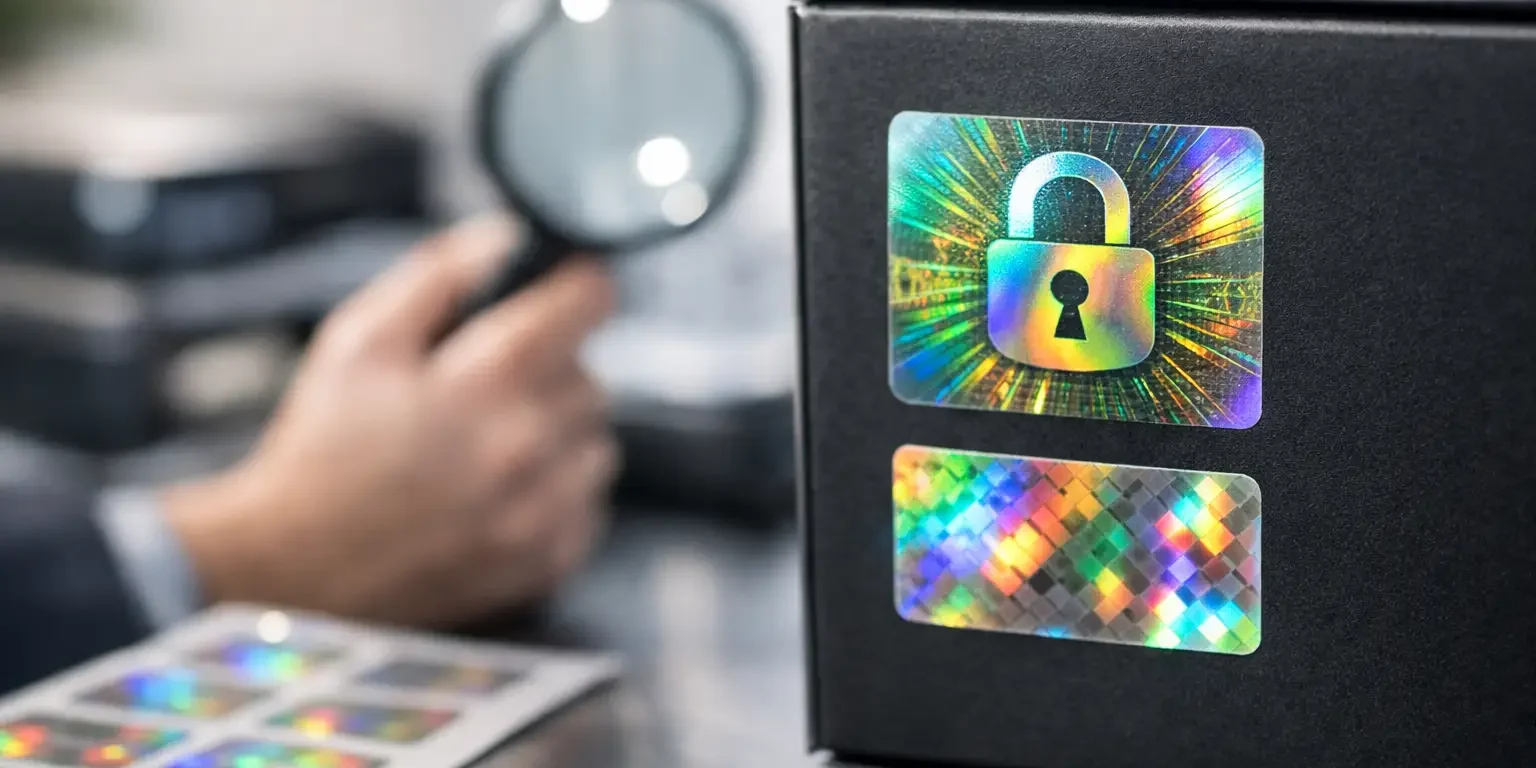
A plain paper sticker does very little once equipment starts moving between rooms, sites or users. Hologram security labels are different. They give you a visible layer of protection that is difficult to copy, easy to spot during checks, and useful for organisations that need clearer control over assets, packaging or access points.
For many buyers, the appeal is straightforward. A holographic label makes tampering more obvious, discourages casual removal, and adds a level of authenticity that standard printed labels cannot match. That does not mean every job needs one. The right choice depends on what you are protecting, how the label will be checked, and whether deterrence, identification or tamper evidence is the main priority.
Where hologram security labels make sense
Hologram labels are commonly used where equipment or products need quick visual verification. That includes laptops, tablets, AV equipment, tools, medical devices, calibration-controlled items, warranty seals and branded goods where authenticity matters. In a school, council department or business with shared equipment, they can make an asset look clearly marked and less attractive to remove or swap.
They are also useful when a label needs to do more than carry a serial number. A standard asset label can identify an item perfectly well, but a hologram adds a feature that is much harder to imitate with an office printer. If your concern is substitution, counterfeit returns or informal tampering, that extra visual complexity has real value.
For some organisations, the benefit is as much behavioural as technical. A visible holographic effect signals that the item is controlled, recorded and expected to be checked. That can be enough to reduce opportunistic interference.
What hologram security labels actually do
There is sometimes confusion around holograms because buyers group several functions together under one term. A hologram can provide overt security, meaning a feature that staff can recognise by eye. It can also be combined with tamper-evident construction, so the label breaks, fragments or leaves evidence if someone tries to remove it.
Those are not the same thing. A holographic finish on its own may deter copying, but it will not automatically show that removal has been attempted. Equally, a destructible security label may reveal tampering without having any holographic element at all. The best specification depends on the risk you are trying to reduce.
If the main issue is counterfeit goods or unofficial replacements, the hologram itself may be the key feature. If the problem is users peeling labels off devices, then material choice and tamper performance matter more. In many cases, combining both is the sensible route.
Hologram security labels for assets and equipment
For asset management, labels need to survive everyday handling first and look smart second. That is why the specification matters more than the effect. A hologram asset label should still be readable after cleaning, transport, heat from equipment and regular contact from hands or bags.
In practice, many organisations want a holographic label to carry a company name, logo, sequential numbering, barcode or QR code as well. That allows the label to support audit and tracking processes rather than acting as a visual badge alone. A good label should fit into the asset register you already use, whether that is a spreadsheet, facilities database or barcode-based inventory system.
Size is another practical factor. Too small, and the security effect is less obvious while codes become harder to scan. Too large, and the label may not fit neatly on compact devices or curved surfaces. For laptops and IT equipment, a modest rectangular format often works well. For warranty seals or access panels, a smaller label may be more appropriate, provided tamper evidence remains clear.
The trade-off between appearance and tamper evidence
This is where many purchasing decisions go wrong. Some buyers focus on the holographic appearance because it looks secure, while others specify the most aggressive tamper-evident material without considering whether it suits the surface.
A highly destructible label can be ideal on smooth, permanent surfaces where removal should never happen. On textured plastics, powder-coated metal or low-energy surfaces, performance can vary. If the adhesive bond is compromised by the substrate, you may not get the result you expected. Surface condition, application temperature and curing time all affect adhesion.
There is also a usability question. If equipment needs to be refurbished, serviced or reassigned, a label that self-destructs instantly may create more work. In those cases, it can be better to separate functions – using a durable asset label for identification and a smaller tamper-evident hologram seal for access protection or warranty control.
What to specify before you order
The quickest way to get the right product is to define the job clearly. Start with the surface the label will be applied to, whether that is metal, ABS plastic, coated equipment housing, packaging board or glass. Then consider exposure. Indoor office use is very different from warehouse handling, outdoor storage or repeated cleaning.
Next, decide what information the label needs to carry. If you need unique numbering, barcodes or QR codes, the print quality must support reliable scanning. If the label is mainly for visual authentication, that changes the balance between branding and machine-readable data.
It also helps to be clear about the failure mode you want. Should the label fragment on removal, leave a residue pattern, show a void message, or simply resist casual peeling? There is no single best answer. A finance team managing laptop stock may want obvious asset marking and numbering. A manufacturer sealing cartons or enclosures may need tamper evidence to be unmistakable. A brand owner may care most about anti-copy features.
Finally, think about quantity and consistency. If multiple departments or sites are ordering labels over time, standardising the format avoids confusion. Fixed dimensions, numbering rules and barcode layout make checks quicker and reordering simpler.
Customisation matters more than many buyers expect
Off-the-shelf labels can work for basic marking, but security labels tend to be more effective when tailored to the job. Adding a company logo, bespoke text, serial numbers or barcode data gives the label a practical purpose beyond deterrence. It also makes substitution harder.
For public sector teams, schools and growing businesses, that can be especially helpful. A generic hologram says the item is marked. A custom hologram security label with your organisation name and unique numbering says the item belongs in a controlled register and can be traced.
That level of detail also helps during audits, stock checks and insurance queries. When a label is legible, durable and tied to an internal record, it supports accountability rather than just decoration.
Why UK production can make a difference
Lead time is often underestimated until a rollout is already late. If you are relabelling IT assets before term starts, sealing stock before dispatch, or preparing for an audit, delays become expensive very quickly.
Working with a specialist UK manufacturer reduces some of that friction. You are more likely to get practical advice on materials, barcode setup and tamper requirements without a long back-and-forth. It also makes reorders and amendments easier if your numbering format or artwork changes.
That specialist input is useful because security labels are rarely a one-size-fits-all purchase. The right answer often comes from asking a few direct questions about surface, use and risk, then matching the label construction to the real application.
When hologram labels are not the best option
Hologram labels are effective, but they are not the answer to every identification problem. If your only need is low-cost asset numbering for internal furniture or storage items, a standard durable barcode label may be the better fit. If the environment is harsh and readability is more important than overt security, material durability may matter more than a holographic effect.
They are also less useful if no one checks them. A security feature has most value when staff know what to look for and the label is part of a real process, whether that is goods-in inspection, equipment audits or warranty verification. Without that, you may be paying for a feature that is seldom used.
The sensible approach is to treat hologram labels as part of a wider control system. They work best when combined with clear numbering, proper records and consistent checking.
For organisations that want stronger visual security without making ordering complicated, hologram labels can be a very practical choice. The best results come from specifying them properly, not simply choosing the flashiest finish. If you start with the asset, the environment and the kind of interference you need to prevent, the right label tends to become obvious.
