
A cabinet can look closed and secure while still giving no indication that somebody has opened it. For IT cupboards, medicine cabinets, key cabinets, control panels and storage units, the best security seals for cabinets provide a clear, low-cost way to show whether access has taken place between inspections. The right seal does not replace a lock or access-control process. It gives your team visible evidence that the process has been followed.
That distinction matters. A standard sticker may peel away cleanly and be applied again. A suitable tamper-evident seal changes permanently when it is lifted, broken or removed. It turns an uncertain question – has this cabinet been opened? – into something a facilities manager, technician or auditor can check in seconds.
What makes a cabinet security seal effective?
The best choice depends on the cabinet, the surface and the outcome you need after a seal is disturbed. In most workplace applications, an effective cabinet seal needs to do three things: adhere properly, provide obvious tamper evidence and allow the seal to be traced back to a particular asset, room or inspection.
Adhesion comes first. Powder-coated steel, painted metal, plastic laminate and smooth painted wood can all accept labels, but their surfaces behave differently. Dust, polish, oil and textured finishes reduce bond strength. A label that falls away naturally is not security evidence, so the application surface should be clean, dry and free from silicone-based cleaners before sealing.
The second requirement is visible evidence. This can be a hidden message revealed on removal, a label that breaks into pieces, or a deliberately destructible material that cannot be lifted intact. A seal should make interference easy to see without requiring a specialist tool or close examination.
Traceability is the third requirement. A unique serial number, barcode or QR code makes a cabinet seal more useful than a generic warning label. It enables staff to record which seal was applied, where it was used and whether the number matches the inspection record. This is particularly valuable where multiple cabinets are checked across a school, office estate, warehouse or public-sector site.
The best security seals for cabinets by use case
There is no single best material for every cabinet. The practical decision is whether you need a label to show attempted access, a seal that physically bridges a door and frame, or a more durable control for higher-risk equipment.
Void-revealing tamper-evident labels
Void labels are a strong all-round option for enclosed cabinets with smooth, clean surfaces. Once removed, they leave a visible word or pattern such as VOID on the cabinet, the label itself, or both. This makes them well suited to IT cabinets, electrical enclosures, locked storage cupboards and asset cabinets where the seal may need to remain in place for weeks or months.
Their main advantage is clarity. A person can see at once that the label has been disturbed, even if somebody tries to press it back down. They also provide good scope for custom printing, including company details, sequential numbering, barcodes and inspection instructions.
The trade-off is residue. Some void materials are designed to leave a clear adhesive pattern, which is exactly what you want for evidence but may be less suitable for a heritage finish, a regularly refurbished cabinet or a surface that must be returned to a pristine condition. Ask for advice if residue-free removal is a priority, as the correct material depends on both the surface and the expected duration of use.
Destructible security labels
Destructible vinyl labels fracture into small pieces if removal is attempted. They are difficult to remove in one piece and cannot realistically be reused. This makes them useful where a clean lift would be a concern, including small control boxes, alarm cabinets, meter cupboards and portable equipment cases.
For cabinets, destructible labels work best when placed across the opening edge, bridging the door and frame. They should not be used merely as an identification label on the cabinet body, as that does not show whether the door has been opened.
These labels offer strong tamper indication, but they are intended for one-time use. Once an authorised person opens the cabinet, the damaged label needs replacing and the event should be recorded. That is normally a benefit in controlled maintenance environments, but it should be factored into stock planning.
Serialised tamper seals for inspection control
A tamper-evident label becomes more accountable when every seal carries an individual number. Serialised seals are particularly useful for organisations with documented inspection routines, contractor access or compliance obligations. The inspector records the number when the seal is applied, then checks it at the next visit.
For example, a facilities team might seal a comms cabinet after a network upgrade and record the unique number in its maintenance log. If the number is missing, does not match, or the label shows evidence of removal, the team knows the cabinet needs investigation. The process is simple, but it closes a common gap in handover and contractor control.
Sequential numbers are often enough. Where a business already scans assets or manages work orders digitally, a barcode or QR code can speed up checking and reduce transcription errors. The format needs to work with the scanner or mobile device already in use. A barcode that cannot be read reliably at the point of inspection adds little value.
Cable and pull-tight seals
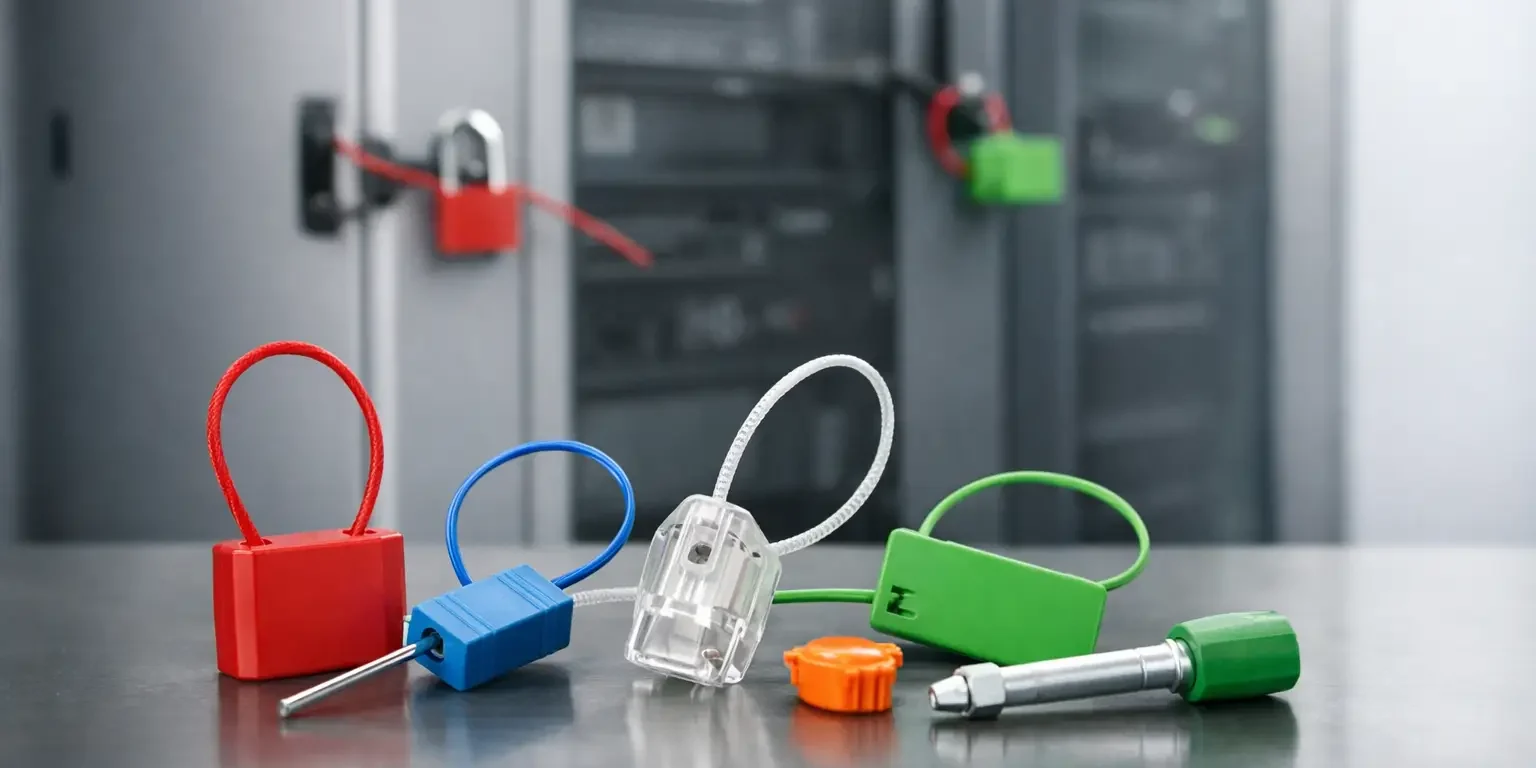
Where a cabinet has hasps, lugs or aligned locking points, a pull-tight plastic seal or wire seal can physically secure the opening. These are useful for utility cupboards, server-rack doors, meter cabinets and equipment cages where an adhesive label may not suit the design.
Unlike a label, a cable seal is visibly threaded through a fixing point and normally must be cut or broken to open the cabinet. Its printed serial number gives a straightforward audit trail. However, it will not work on a flush-fitting door without suitable holes or hardware, and it can be more conspicuous than a label. For typical office storage cabinets, a tamper-evident label is often the cleaner option.
Choose the material around the cabinet, not just the risk
Security level is only part of the decision. The cabinet environment can be just as significant. A seal on an indoor office cupboard faces very different conditions from one on a warehouse electrical cabinet exposed to cold, damp, dust or regular cleaning.
For internal, dry locations, standard tamper-evident label materials are usually appropriate when applied correctly. For areas with frequent temperature changes, cleaning chemicals or demanding surfaces, discuss the application before ordering. A material that performs well on smooth coated metal may not bond consistently to rough powder coating or low-energy plastic.
Placement also affects performance. Apply the seal so it crosses the point of access and cannot be bypassed by opening another part of the cabinet. On a hinged door, this usually means positioning it between the door edge and fixed frame. Avoid corners, deep grooves, raised textures and areas likely to be gripped during normal use. If a cabinet has two doors, consider whether one seal genuinely controls both doors or whether each opening needs its own seal.
Build the seal into a simple operating procedure
A security seal is most effective when people know what to check and what to do next. There is little benefit in fitting serialised seals if no one records the numbers or investigates discrepancies.
A workable procedure should state who is authorised to break a seal, where the event is logged and who applies the replacement. It should also identify the expected inspection frequency. High-risk cabinets may be checked daily or at every shift handover, while low-risk records cupboards may only need checking during a weekly facilities round.
For consistent use across a larger estate, standardise the wording and format. A printed label can include the cabinet reference, a serial number, a barcode and a short instruction such as “Do not remove without authorisation”. This reduces ambiguity for staff and contractors while supporting a clearer audit trail.
Before placing a full order, test a small quantity on representative cabinets. Check adhesion after the labels have settled, then trial authorised removal. You need to see how obvious the tamper evidence is, whether residue is acceptable and whether the serial number or barcode remains readable. This small check can prevent the cost and disruption of choosing an unsuitable material for hundreds of cabinets.
Security-Label.co.uk can produce UK-made tamper-evident labels with bespoke sizes, serial numbers, barcodes and layouts, helping organisations match the seal to their cabinets and internal control process.
The best cabinet seal is the one that fits the surface, makes unauthorised opening immediately visible and gives your team a record they can act on. Treat it as part of the inspection process rather than a sticker added at the end, and it will provide far more dependable control.