
A missing laptop, an opened electrical cabinet or a tool returned with parts swapped can create far more work than the value of the item suggests. When you secure equipment with seals, you create a visible control point: authorised people can see whether an item, case or enclosure has been opened since it was checked.
For facilities, IT and operations teams, security seals work best as part of a clear asset-control process. They do not make equipment impossible to steal or access, but they make interference more difficult to hide. The right seal also gives staff a simple reason to stop, check records and investigate before equipment is put back into service.
Why secure equipment with seals?
Security seals provide tamper evidence rather than an impenetrable physical barrier. This distinction matters. A determined person may be able to remove or break a seal, but they should not be able to do so without leaving visible evidence. That evidence supports accountability, routine inspections and incident investigations.
They are particularly useful where equipment must remain in a known condition between checks. Examples include IT cabinets, server racks, electrical panels, first-aid kits, portable testing equipment, toolboxes, flight cases, safety equipment and hired assets. A numbered seal can also show that a particular case or compartment has remained closed from handover to return.
For many organisations, the benefit is operational as much as security-related. Staff no longer need to rely on memory or assumptions about who last opened an item. A broken, missing or mismatched seal prompts a defined action, such as checking the contents, reviewing the asset record and escalating the issue to the appropriate manager.
Choose the seal for the risk, not the appearance
The most suitable option depends on what needs to be protected, the surface it will be applied to and how the equipment is used. A seal that is right for a clean, indoor IT cabinet may fail quickly on an outdoor plant case exposed to rain, dirt and temperature changes.
Tamper-evident labels for panels and housings
Tamper-evident security labels are a practical choice for equipment housings, access panels, cases and cabinets. When removed, they may leave a visible void message, break into pieces or show clear signs of disturbance. They are compact, easy to apply and can be printed with serial numbers, barcodes, QR codes or company details.
Void labels suit situations where it is useful to leave evidence on both the label and the surface. Destructible labels are harder to remove in one piece, which can make transfer from one asset to another more obvious. The material should be selected carefully: surface texture, cleaning products, heat and moisture all affect adhesion and the quality of the tamper evidence.
Numbered pull-tight and cable seals for cases
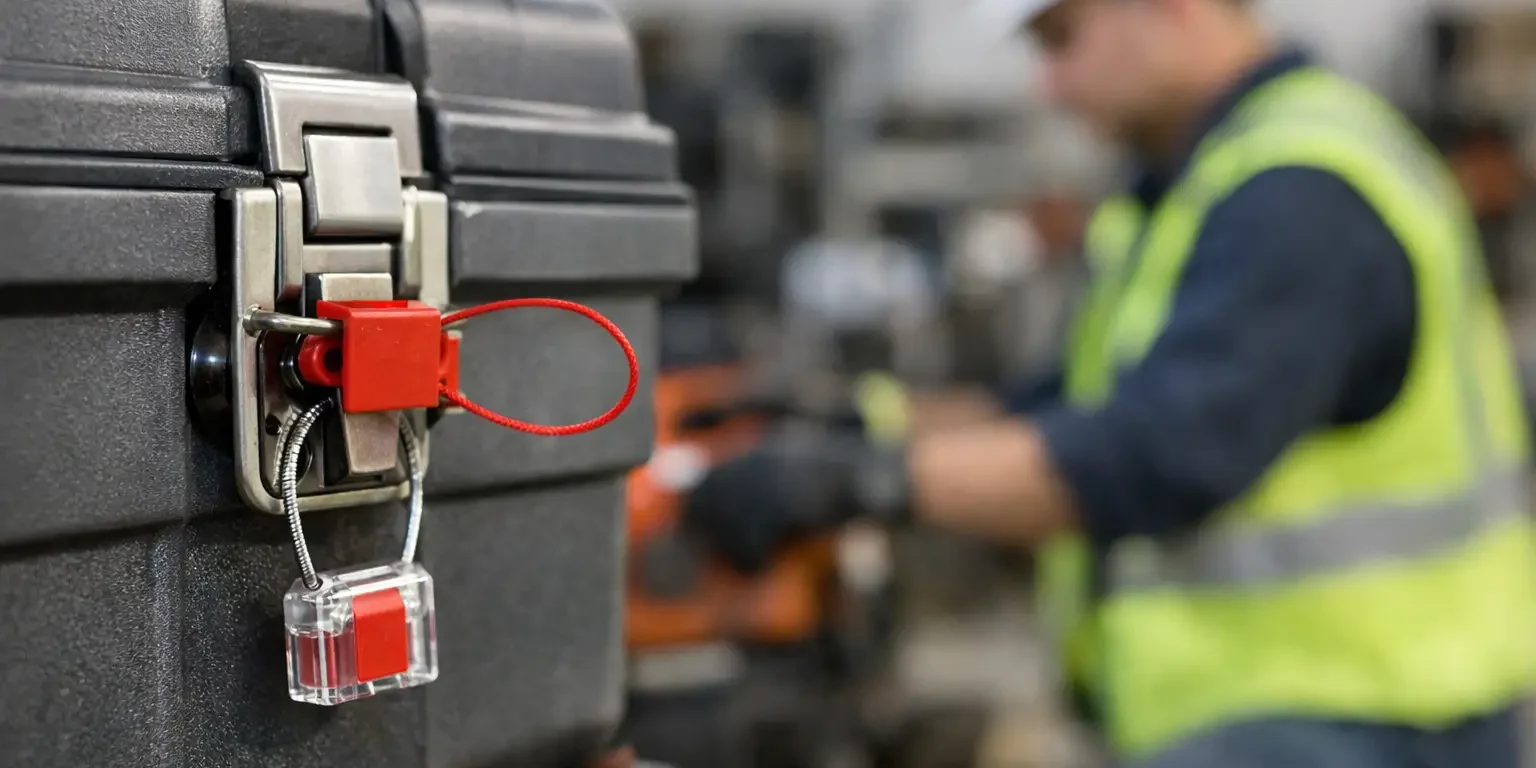
Where a label alone is not appropriate, a numbered pull-tight seal or cable seal can secure a latch, zip, hasp or handle. These are useful for tool cases, storage cages, equipment bags and transport containers. The unique number is the key feature. Record it at the point of issue, then compare it during handover or inspection.
Cable seals generally suit applications needing greater physical strength, while pull-tight seals can be convenient for lighter-duty use and variable loop sizes. Neither should be selected simply because it looks substantial. Consider the size of the locking point, the required seal length, whether cutters will be needed for authorised removal and how staff will inspect the number.
Asset labels and seals serve different purposes
An asset label identifies the equipment permanently. A security seal shows whether a particular access point has been disturbed. Using both creates a stronger process: the asset number identifies the item, while the seal number identifies its current secured state.
For example, an IT team may apply a durable barcode asset label to a laptop docking station, then use a numbered tamper-evident label across the enclosure where unauthorised access could affect the warranty or configuration. The barcode remains part of the asset register; the seal can be replaced after authorised maintenance and the new number added to the service record.
Make the seal part of the asset record
A seal without a record is only a visual deterrent. Its value increases when staff can verify what they are looking at. The process does not need to be complicated, but it must be consistent.
At minimum, record the asset ID, equipment description, location, seal type, unique seal number, application date and the person responsible. If the equipment is regularly maintained, include the expected review date and the reason for seal removal when it occurs. A spreadsheet may be sufficient for a small estate; larger organisations may add the information to their asset-management or maintenance system.
Barcodes and QR codes can reduce manual entry errors. A barcode on the asset label allows the user to scan the equipment ID, while the serial number printed on the seal can be entered or scanned where the chosen format supports it. The format should work with the scanners and software already in use. There is little value in specifying a barcode symbology that cannot be read during a busy inspection.
Apply seals so they can be checked quickly
Poor application can undermine a good product. Before fitting any adhesive security label, clean and dry the surface. Remove dust, oil, polish and residue from previous labels, then allow the area to dry fully. Apply firm, even pressure across the label, especially at the edges, and avoid placing it over deep ridges, loose paint or heavily textured surfaces unless the material has been chosen for that application.
Position matters as well. A label should cross the opening line of a panel, lid or enclosure, not sit beside it. It needs to be visible enough for routine inspection but not so exposed that it is rubbed constantly by hands, bags or moving parts. For cable and pull-tight seals, thread the seal through a point that cannot be opened without breaking or removing it. Leave the printed number facing outward where possible.
Create a short application standard for each equipment category. A photograph of the correct placement can prevent inconsistency across sites or shifts. This is especially helpful where contractors, technicians or school support staff share responsibility for equipment.
Plan for authorised access
Seals should not obstruct urgent repairs, safety checks or legitimate maintenance. If an engineer needs to open a cabinet, the process should be straightforward: record the existing seal number, remove the seal, complete the work, fit a replacement and update the record. Staff should never feel pressured to work around a seal or leave an enclosure unsecured because replacements are unavailable.
Keep a controlled stock of replacement seals and labels at the point of use. Limit access to numbered stock, particularly where seal numbers are relied on for audit purposes. If a roll or batch goes missing, record the unused serial range and treat it as a control issue rather than quietly issuing new stock.
It also helps to define what happens when a seal is found broken. The response will depend on the equipment and risk level. A broken seal on a low-value storage case may require a contents check and replacement. A broken seal on a network cabinet, calibrated instrument or safety-critical enclosure may require the item to be isolated, inspected by a competent person and documented before it returns to use.
Avoid common weaknesses
The most common mistake is treating every application the same. Standard paper-based labels are not suitable for demanding environments, and a light-duty plastic seal may not suit a case that is moved between vehicles every day. Material choice should reflect the conditions, expected service life and level of tamper evidence required.
Another weakness is using generic seals with no numbering, no company identification and no link to an asset record. They may discourage casual interference, but they offer limited traceability. Custom security labels can include a logo, sequential numbers, barcodes and clear instructions such as “Void if removed”, making unauthorised replacement more apparent.
Finally, do not rely on seals in isolation. Good asset security also needs accurate registers, controlled access, regular checks and clear ownership. Seals give those controls a visible, practical point of verification.
Security-Label.co.uk can advise on bespoke tamper-evident labels, serial numbering and durable asset identification for UK organisations with specific equipment, surface or tracking requirements. The best result is usually a straightforward one: select a seal that suits the application, record it properly and give staff a clear instruction for what to do when it is no longer intact.