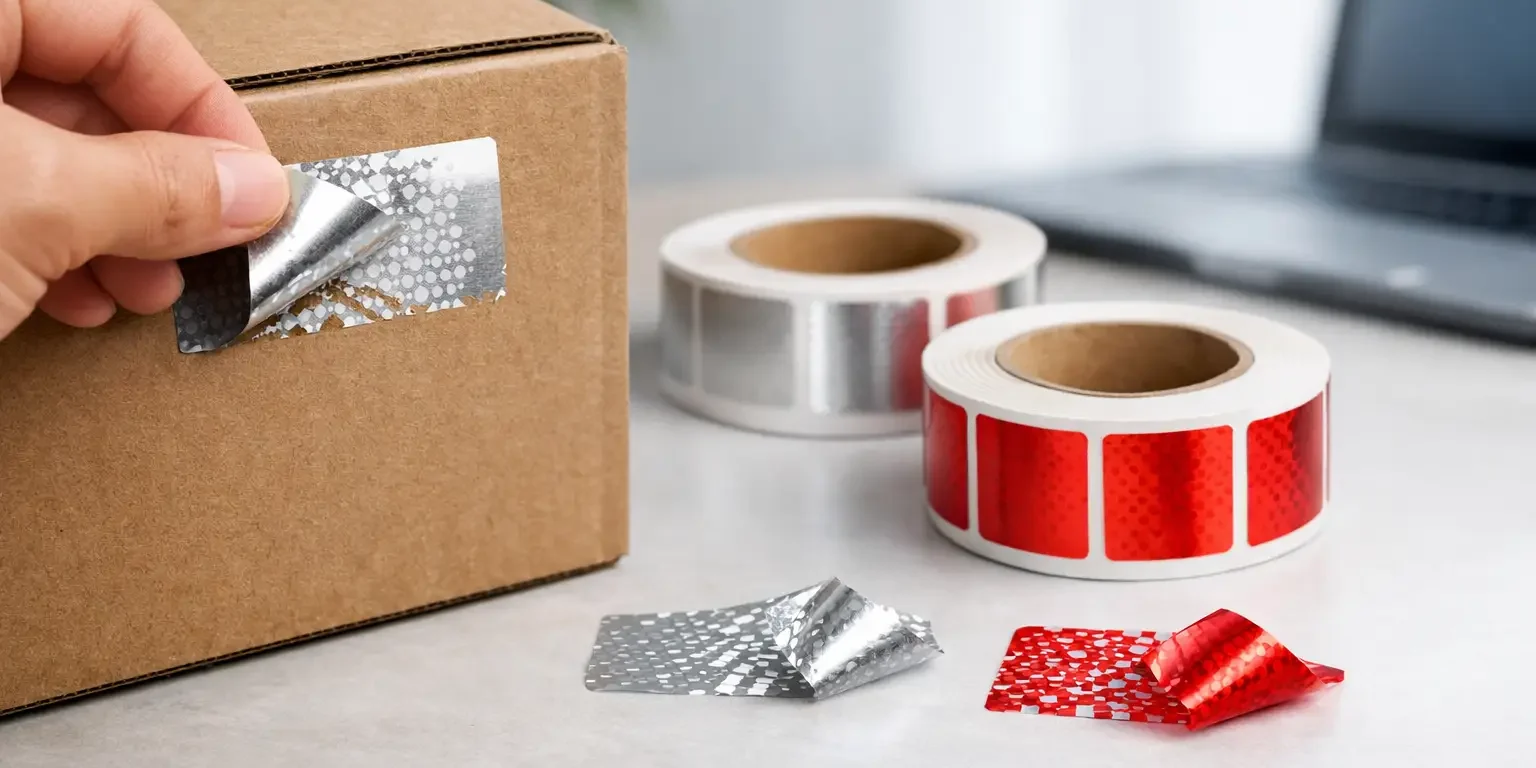
A laptop returned to stores with the case opened, a calibration label lifted and replaced, a carton that arrives looking fine until someone notices the seal has been disturbed – these are the moments that explain why use tamper evident stickers is a practical question, not a marketing one. For organisations responsible for equipment, stock or sensitive access points, the right label does more than mark an item. It shows whether someone has interfered with it.
Why use tamper evident stickers in the first place?
The main reason is straightforward: they make unauthorised access visible. A standard label may identify an asset or carry a barcode, but it often peels away cleanly. A tamper evident sticker is designed to leave evidence behind if someone tries to remove, lift or reposition it.
That changes the conversation from suspicion to proof. Instead of arguing about whether an item was opened, relabelled or accessed, your team has a clear visual indication that the seal has been disturbed. In day-to-day operations, that can help with everything from internal accountability to warranty control and stock integrity.
For many buyers, the value is less about dramatic security events and more about reducing low-level risk. IT teams use them on devices and access panels. Facilities managers apply them to meters, cabinets and restricted controls. Schools, councils and NHS departments use them where equipment moves between users or locations and an audit trail matters.
They deter tampering before it happens
A visible security label can stop interference simply by being there. Most casual tampering relies on the assumption that nobody will notice. Once a sticker clearly shows that removal will leave a mark, residue or destruct pattern, that assumption disappears.
This is especially useful for portable or high-turnover assets such as laptops, tablets, handheld scanners and tools. If an item is likely to pass through several hands, a tamper evident label adds a layer of accountability without adding complexity to your process.
Deterrence is not absolute, and it would be unrealistic to present it that way. A determined individual may still interfere with an item. The point is that tamper evident stickers make interference harder to conceal, which is often enough to reduce opportunistic behaviour.
They support audit, compliance and internal control
Many organisations are under pressure to prove that equipment is properly managed. That may come from insurers, internal auditors, finance teams, data protection requirements or simple operational discipline. Tamper evident stickers are useful because they create a visible control point.
For example, if a device should only be opened by authorised engineers, a broken seal gives your team an immediate reason to inspect it. If stock should remain sealed until it reaches a department or customer, a damaged label flags a handling issue. If a safety check or calibration process depends on the item remaining untouched, a tamper evident seal can support that control.
On its own, a sticker is not a full compliance system. It works best when paired with serial numbers, asset records, barcode scanning or signed issue procedures. That is where a specialist label supplier adds value, because the label can be designed to fit the process rather than becoming a separate admin burden.
Why use tamper evident stickers on assets?
Asset management is one of the clearest use cases. A standard asset label identifies what an item is and who it belongs to. A tamper evident asset label does that while also showing whether someone has tried to remove or swap the identifier.
That matters when labels are linked to your asset register. If an asset tag can be peeled off and transferred to another item, the record loses value. A destructible or void-style label helps prevent this by breaking apart or revealing tamper evidence during removal.
This is particularly relevant for IT estates, education settings and shared equipment environments where devices are moved, reassigned or loaned out. It also helps procurement and finance teams protect the integrity of capital asset records, which is often just as important as preventing theft.
Different tamper evident materials suit different risks
Not all tamper evident stickers behave in the same way, and choosing the wrong type can lead to frustration. Some labels leave a void message behind when removed. Others fragment into small pieces. Some leave visible residue, while others are designed for cleaner surfaces but still show disturbance.
The right option depends on the surface, environment and objective. Smooth metal and plastic surfaces often suit void materials very well. Curved, textured or low-energy surfaces may need more careful material selection. If the label also needs to carry a barcode or serial number, print quality and durability matter as much as the tamper feature itself.
There is also a balance to strike between security and practicality. A highly aggressive destructible label may be ideal for permanent asset marking, but less suitable if maintenance staff need a controlled way to remove and replace seals as part of approved service work. In those cases, bespoke numbering or inspection procedures may matter just as much as the adhesive.
They help reduce disputes and simplify investigations
When equipment goes missing, arrives damaged or appears to have been opened, time is often lost working out what happened and when. Tamper evident stickers do not answer every question, but they narrow the possibilities quickly.
A broken seal on a panel, enclosure or package gives managers a clear starting point. It can show that an item needs to be quarantined, checked or escalated. It can also help distinguish between accidental handling and deliberate access.
That has practical value across departments. Operations teams can isolate suspect stock sooner. IT managers can flag devices for inspection before redeployment. Facilities teams can identify whether restricted areas or controls have been accessed outside normal procedure. Even where the sticker only confirms that further checks are needed, it saves guesswork.
Better results come from customisation
For many organisations, off-the-shelf seals are a starting point rather than the best fit. Custom tamper evident stickers can include company names, serial numbers, barcodes, QR codes, consecutive numbering and specific wording such as warranty void messages or inspection instructions.
That extra detail improves control. A unique serial number makes it harder to substitute one label for another. A barcode can tie the seal directly to your asset register or service record. Branded labels are also easier for staff to recognise, which helps with everyday checking.
This is where specialist production matters. A label must be readable, durable and matched to the application surface. If the sticker is going on a server, a power supply, a medical trolley or a warehouse cage, the material and print specification should reflect real use rather than a generic assumption.
When tamper evident stickers may not be enough on their own
There are situations where a sticker is only one part of the answer. High-value equipment may need a combination of asset labels, tamper seals, controlled access and barcode-based audit routines. Outdoor use may call for extra consideration around weather, abrasion and temperature. Very rough or contaminated surfaces can limit adhesive performance unless the correct material is chosen.
It is also worth being realistic about user behaviour. A tamper evident sticker only helps if someone checks it. If assets are never inspected, scanned or logged, the benefit is reduced. The strongest results come when labels are built into a wider process that staff actually follow.
That does not mean the system needs to be complicated. In many cases, a numbered security label plus a simple asset record is enough to improve accountability substantially. The key is choosing a level of control that suits the value and risk of the item.
The practical case for UK organisations
For UK businesses, schools, healthcare settings and public sector teams, tamper evident stickers offer a relatively low-cost way to strengthen control over physical assets and access points. They are easy to apply, visible to non-technical staff and adaptable to a wide range of uses.
They also help close a common gap between identification and security. Many organisations already label equipment, but not all labels are designed to resist transfer or reveal interference. Upgrading to tamper evident stock is often a modest change that brings a clear operational benefit.
A specialist manufacturer such as Security-Label.co.uk can usually advise on the right construction, print format and numbering options without overcomplicating the order. That matters when buyers need practical answers, quick turnaround and labels that work first time.
If you are reviewing asset control, packaging security or restricted-access equipment, the better question may not be whether you can afford tamper evident stickers, but whether you can afford not to know when something has been opened.