
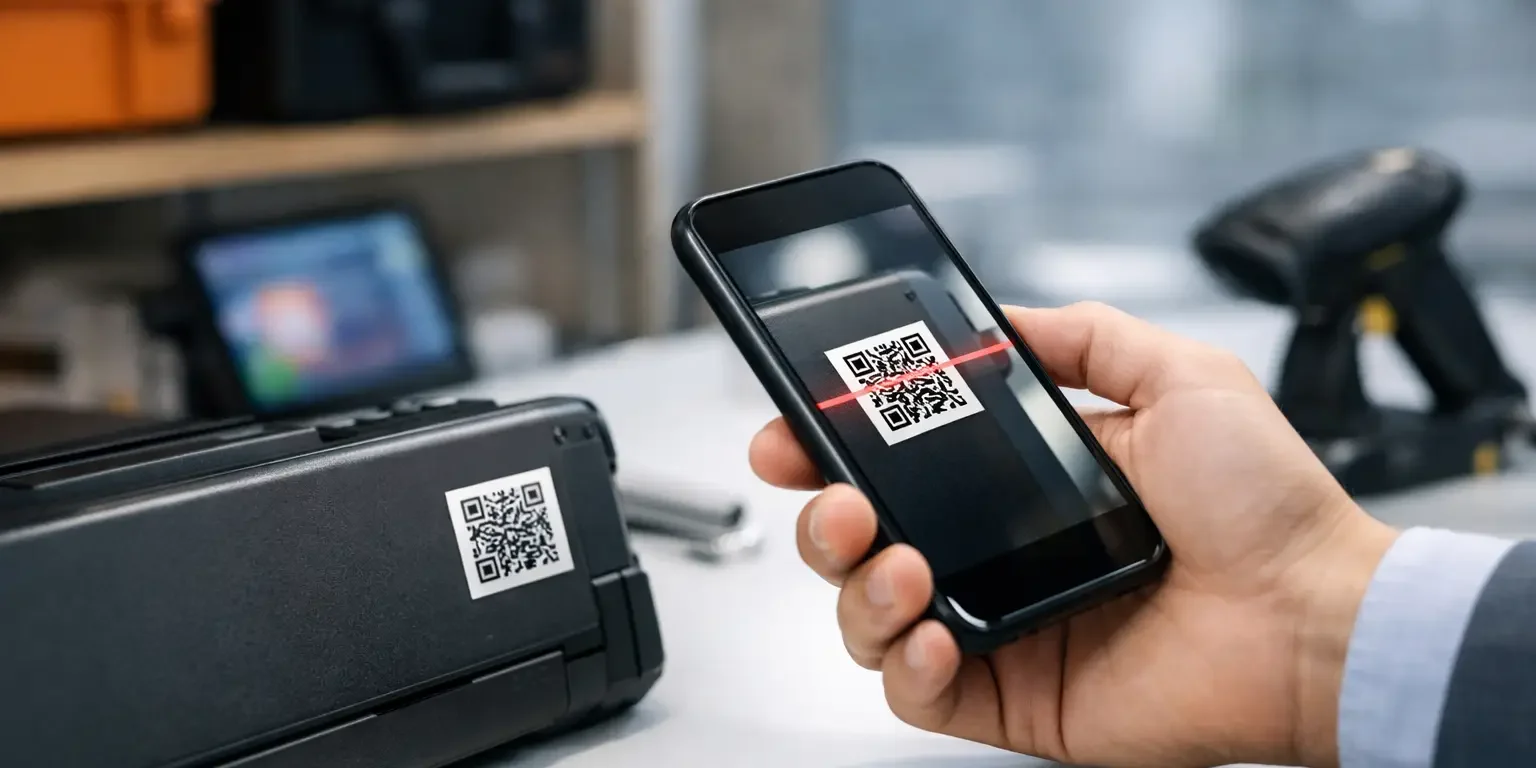
A missing laptop during an audit rarely turns out to be missing at all. More often, it is in the wrong room, signed out informally, or recorded under an old asset number that nobody has updated. That is where qr code asset labels earn their place. They give teams a faster way to identify equipment, check records on the spot and keep asset data tied to the item itself rather than a spreadsheet that soon falls behind.
For schools, offices, warehouses, healthcare settings and public sector departments, the value is practical. You need a label that stays attached, scans reliably and matches the way your team already works. A QR code is not a gimmick. Used properly, it is a simple tool for tightening control over physical assets without making day-to-day administration harder.
What QR code asset labels actually do
At a basic level, QR code asset labels link a physical item to digital information. That might be an asset ID in your register, a service history record, a location, a user assignment or an internal webpage. When someone scans the code with a phone, tablet or scanner, they are taken straight to the relevant data instead of searching manually.
That speed matters more than many buyers expect. During stock checks, office moves, maintenance visits or year-end audits, the time lost typing serial numbers or cross-checking handwritten notes adds up quickly. A clear QR code shortens that process and reduces avoidable mistakes.
The code itself is only part of the job, though. Good asset labels also need readable text, a logical numbering system and the right material for the environment. If the printed code scratches off, curls at the edges or fails after a few months on a cleaned surface, the tracking system becomes unreliable. In practice, label construction matters just as much as the data encoded in the symbol.
Why organisations are moving from basic numbering to qr code asset labels
Traditional sequential numbering still has a place. It is familiar, visible and easy to reference over the phone or in a written report. But on its own, it does not give staff a quick route to supporting information. That is the main reason many organisations now combine human-readable numbering with QR codes on the same label.
The benefit is not just convenience. It also helps standardise processes across departments. An IT manager scanning a laptop, a caretaker checking audiovisual equipment and a finance team member verifying assets for insurance purposes can all reach the same record in the same way. That consistency is useful when several teams share responsibility for equipment.
There is also a deterrent effect. Clearly marked labels signal that assets are registered and monitored. On higher-value items, that visible control can discourage casual removal or unofficial swapping between sites. If tamper-evident materials are added, the label can also show whether an attempt has been made to remove or replace it.
Choosing the right information to include
One of the most common mistakes is trying to put too much into the QR code and too little on the printed face of the label. In most cases, the best result comes from balance.
A practical asset label usually includes the company or organisation name, a unique asset number and the QR code itself. Some buyers also add a barcode, department name, serial number, contact details or a brief message such as Property of or Do Not Remove. The right layout depends on how the asset will be checked and by whom.
If labels are used in public-facing environments such as schools, universities or shared offices, there is a good case for keeping the visible information simple and storing fuller records behind the code. If only internal staff will scan the label, you may have more flexibility. Either way, the code should lead to useful, maintained information. A QR code that opens an outdated record is worse than no QR code at all because it creates false confidence.
Materials matter more than most buyers expect
A QR code scans only if the print stays sharp and the label remains in place. That sounds obvious, but label failures are often caused by choosing a material on price alone.
For general indoor asset identification, polyester is a dependable option because it offers good durability, clear print quality and resistance to everyday handling. On equipment that is cleaned frequently or exposed to abrasion, a tougher construction may be sensible. For more sensitive applications, tamper-evident materials can provide an added layer of protection by leaving evidence if removal is attempted.
Surface type also matters. Smooth powder-coated metal, plastic housings, textured cases and curved equipment can all behave differently. Adhesive performance depends on the substrate, temperature and how clean the surface is at application. If a label is expected to stay put for years, it is worth matching the specification to the actual conditions rather than assuming one stock material suits everything.
This is where specialist advice tends to save money. Reordering failed labels, replacing missing identifiers and repeating audits costs more than choosing the right construction in the first place.
QR code asset labels and system compatibility
Before ordering, it is worth deciding what the QR code should do when scanned. Some organisations want it to display a plain asset number that can be entered into an existing system. Others want it to open a URL, connect to a cloud register or pre-fill a helpdesk form.
There is no single correct approach. If your asset management system is already established, the QR code should fit around it. If your process is still fairly manual, a simpler setup may be better at first. The key is to avoid creating labels that look modern but add another layer of complexity for staff.
It is also sensible to think about devices. Will codes be scanned on company phones, tablets or dedicated readers? Will staff be scanning in plant rooms with poor lighting or across a classroom full of devices? Code size, contrast and print quality all affect scan performance. Smaller labels can work very well, but only if the design allows enough space for the code to remain clear.
When bespoke labels are the better choice
Off-the-shelf labels are fine for some uses, particularly where the environment is straightforward and the data requirement is basic. But many organisations need more than a standard blank label with a printed code.
Bespoke QR code asset labels allow you to control size, layout, numbering, branding and material specification. That is useful when labels need to match an asset register, include consecutive serial numbers or fit a limited application area. It is also important where procurement teams want consistency across multiple sites or departments.
For example, a school might need compact labels for tablets, larger labels for interactive screens and tamper-evident versions for networking equipment. A facilities team may want one format for fixed plant and another for portable tools. Bespoke production makes that manageable without sacrificing consistency in numbering and scan behaviour.
Security-Label.co.uk works with organisations that need exactly this sort of practical flexibility – not just printed labels, but labels specified for the job they have to do.
Common trade-offs to consider
There is always a balance between size, durability, detail and cost. A very small label may fit neatly on compact equipment, but if it carries too much data the QR code can become dense and harder to scan. A highly tamper-evident material adds security, but it may not suit every surface or every removal scenario. Laminating can improve durability, but it may not be necessary for a low-wear office environment.
That does not mean the process is complicated. It simply means the best label depends on the asset, the handling conditions and the way your team uses the data. Buyers who start with those practical questions usually end up with a better and more economical result than those who focus on format alone.
Getting better results from your labels
The most successful asset label projects tend to follow the same pattern. The numbering structure is planned before printing. The data behind the QR code is tested. The material is matched to the surface and environment. Staff know what to do when they scan the label.
Application also deserves attention. Labels should be applied to clean, dry surfaces with firm pressure, and they need enough flat area for proper adhesion and easy scanning. Placing a label where it will be rubbed constantly, cleaned with harsh chemicals or hidden by a docking station can undermine even a well-made product.
A good label does not fix a poor process, but it does make a good process easier to follow. That is the real value of QR coding in asset management. It reduces friction. People can identify, verify and update equipment faster, which means records stay more accurate over time.
If you are reviewing your current asset labelling, start with the basics. Decide what staff need to see, what they need to scan and what the label must withstand over its life. Once those points are clear, the right QR code asset labels are usually straightforward to specify – and far easier to live with when the next audit comes round.
