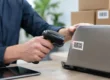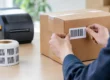

A label that peels from a laptop, smudges after a routine clean, or leaves a barcode that will not scan has failed long before the asset reaches the end of its working life. This asset label durability review looks at what genuinely determines label performance, so UK organisations can specify identification labels that remain useful for audits, stock checks and loss prevention.
For most organisations, the cheapest label is not automatically the lowest-cost option. Replacing labels, reconciling incomplete asset records and manually identifying equipment all create avoidable work. The right choice depends on the asset surface, its environment, how it is handled and the security function the label needs to provide.
Asset label durability review: what should be tested?
Durability is not one single property. A label may resist water yet fail when wiped with cleaning chemicals. It may adhere well to painted metal but lift from a textured plastic casing. It may look perfect to the eye while its printed barcode has lost enough contrast to prevent reliable scanning.
A worthwhile review therefore considers the label as a complete construction: face material, print method, protective finish and adhesive. The asset itself is part of the equation. A smooth desktop PC, a powder-coated tool cabinet, a curved monitor stand and a frequently handled handheld device all place different demands on the label.
In practical terms, assess whether the label needs to withstand regular handling, scuffing, cleaning, moisture, temperature changes, sunlight or exposure to oils and chemicals. Also consider the expected service life. A label for a hired device used for six months can be specified differently from one intended to remain legible on plant, furniture or IT equipment for years.
Adhesion comes before print quality
An excellent printed label is of little value if its adhesive cannot form a proper bond. Adhesives perform best when they are applied to a clean, dry surface at a suitable temperature. Dust, silicone residues, grease and cleaning-product residue are common reasons for early lifting.
Surface energy also matters. Glass, steel and many smooth plastics are generally straightforward. Low-energy plastics, rough powder coatings and textured surfaces can be more difficult. Curved surfaces create additional tension at the label edges, particularly where a large, stiff label is used.
Permanent adhesive is normally the practical choice for fixed-asset identification because it offers a strong bond after its full curing period. However, permanent does not mean suitable for every substrate or every condition. A specialist manufacturer should ask what the label will be applied to rather than relying on a generic material description.
Common materials and where they work best
Polyester is a strong all-round option for many office, education, healthcare and facilities applications. It is stable, provides a clean surface for serial numbers and barcodes, and can be supplied with a protective laminate where greater resistance to abrasion and cleaning is required. For laptops, monitors, printers, furniture, tools and equipment stored indoors, polyester is often the sensible starting point.
Vinyl has more flexibility, which can make it useful on curved or uneven equipment. Its ability to conform can be valuable, but it is not automatically the best answer for every demanding application. The required adhesive, print protection and expected exposure still need to be considered.
For applications where removal itself should be evident, destructible vinyl or tamper-evident materials add a different kind of durability. These products are designed to break apart, reveal a message or leave evidence when someone tries to remove them. They are not simply tougher identification labels. Their purpose is to make interference apparent.
Metal-effect labels can provide a more premium appearance and can suit certain machinery, equipment and long-term identification requirements. Yet appearance should not override function. If the asset is regularly cleaned, subject to knocks or used outdoors, discuss the full operating conditions before selecting a finish.
The finish that protects the information
Asset records rely on readable data. This may be a company name, asset number, serial number, barcode or QR code. The printed information needs protection as much as the face material does.
A clear laminate is often worthwhile where labels are handled regularly or cleaned with approved workplace products. It creates a protective layer over the print, reducing the risk of scuffing and fading. It can also improve resistance to dirt and moisture. The trade-off is cost, but that additional cost is modest when compared with relabelling a large installed asset base.
Not every label needs lamination. Labels on sheltered office furniture, for example, may perform well without it. Labels on mobile devices, workshop equipment or shared equipment that is wiped between users are more likely to justify the extra protection.
Barcode design has a direct effect on long-term readability too. A barcode that is too small, printed with poor contrast or crowded by other artwork is more likely to fail scanning, especially after wear. Serialised labels should allow enough quiet space around the barcode, use a suitable symbology for the existing system and retain a human-readable asset number as a fallback.
Cleaning products can change the specification
Many organisations now clean shared devices and equipment more frequently than they once did. Alcohol wipes, disinfectant sprays and general-purpose cleaners can gradually affect unprotected print and label edges. The exact result depends on the cleaner, how often it is used and whether it is sprayed directly onto the label.
Where cleaning is routine, specify it from the outset. Providing a sample of the cleaner, or at least its active ingredients, allows a more meaningful recommendation. A material that survives an occasional damp cloth may not be appropriate for a device cleaned daily in a school, hospital, warehouse or public-facing setting.
Security labels versus standard asset labels
Standard asset labels support identification and inventory control. Security labels add a deterrent and an evidence trail. The best option depends on the risk you are managing.
A simple permanent polyester label may be sufficient for desks, chairs and low-risk equipment where the primary concern is audit accuracy. For portable IT, audiovisual equipment, tools or items that could be moved between locations, a tamper-evident label can provide a clearer indication of attempted removal or substitution.
There is a trade-off. Tamper-evident labels are deliberately difficult to remove cleanly, so they are unsuitable where labels must be transferred between assets or removed without residue. They must also be applied correctly, because trying to reposition them may activate the security feature or compromise adhesion.
Holographic elements, sequential numbering and bespoke layouts can strengthen visual identification, but they should support a sensible asset-control process rather than replace it. A label is most effective when its unique number is recorded promptly against the correct asset, owner and location.
How to carry out a practical durability trial
Before committing to a large order, test representative samples on the real assets and in the actual working environment. Apply them to clean surfaces using normal installation procedures, then allow the adhesive time to build its bond. Applying and immediately testing a label can produce misleading results.
Check edge lift, print clarity, scan performance and evidence of scratching after realistic use. Wipe the label using the cleaning process staff will actually follow. Place samples on equipment exposed to cold stores, warm plant rooms, delivery areas or direct light where relevant. If a label is intended for a curved surface, test it on that curve rather than on a flat sample panel.
It is also wise to involve the people who will scan and manage the assets. A barcode may be technically readable but awkwardly positioned on a device. An asset number may be durable but too small for an engineer to read quickly. Durable labelling is operational as well as material-led.
Buying on specification, not guesswork
A clear brief reduces delays and helps prevent a costly mismatch. Include the size of label required, the asset surface, whether the label will be indoors or outdoors, exposure to cleaning or chemicals, the information to be printed, and whether removal must leave evidence. If labels need barcodes or QR codes, confirm the data format and scanning system before production.
Security-Label.co.uk manufactures asset and security labels in the UK and can advise on material, adhesive and tamper-evident options for a particular application. This is especially valuable where a standard label has failed before, or where an organisation needs a bespoke size, numbering sequence or barcode layout.
A durability review should not end when the labels arrive. Keep a small record of the chosen specification, application method and any cleaning restrictions. When assets are replaced or the workplace changes, that record makes the next order quicker and more consistent.
The most reliable label is the one specified for the job it must do, applied to the right surface and still readable when an auditor, engineer or facilities manager needs it most.