
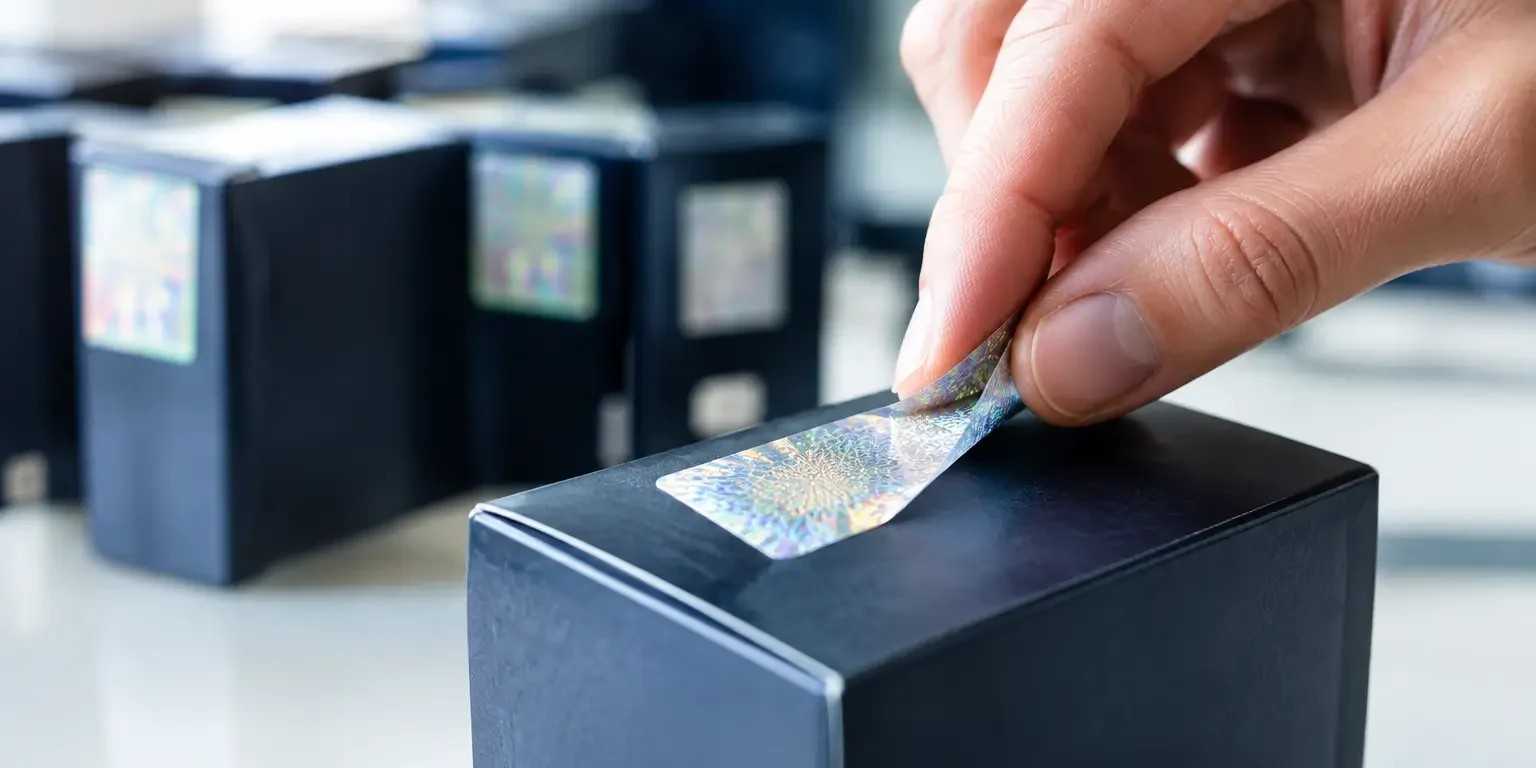
A missing laptop, substituted machine part or refilled product container can create far more than a replacement cost. It can disrupt operations, compromise safety and leave an organisation unable to prove what happened. The anti-counterfeit label market trends affecting UK buyers reflect that reality: security is moving away from a single visible feature towards practical, layered identification that supports inspection, tracking and accountability.
For facilities, IT and operations teams, the useful question is not which security label looks most impressive. It is which combination of material, print method and verification process will work in the places where assets are stored, handled and audited.
Anti-Counterfeit Label Market Trends Shaping Buying Decisions
The strongest market trend is the use of layered protection. A hologram alone may deter casual interference, while a barcode alone may support stock control. Combined with a unique serial number, tamper-evident construction and a clear asset record, they provide a much stronger control. Each feature addresses a different risk: imitation, unauthorised removal, label transfer or poor traceability.
This does not mean every item needs every feature. A school marking hundreds of tablets may need durable numbered asset labels with barcodes and a visible ownership message. A manufacturer protecting serviceable components may need a destructible seal that shows opening or removal. Higher-risk goods, warranties and controlled equipment can justify holographic elements or verification codes. The right specification depends on the value of the item, the likelihood of interference and the consequence of getting it wrong.
Buyers are also placing greater value on labels that are difficult to transfer rather than merely difficult to copy. A convincing-looking label can still be removed from genuine equipment and applied elsewhere. Tamper-evident materials address this issue by leaving a visible pattern, residue or fragmented film when removal is attempted. This makes unauthorised access or asset swapping easier to spot during routine checks.
Security labels are becoming part of asset control
Anti-counterfeit measures increasingly overlap with fixed asset management. Finance teams need accurate records for audits and insurance. IT teams need to identify deployed devices. Facilities teams need to know where equipment belongs and whether it has been interfered with. A properly specified label can provide one consistent identity across those requirements.
Serial numbering remains central because it gives every label a unique reference that staff can read without a scanner. Barcodes speed up stocktakes and issue-and-return processes. QR codes can be useful where a scan needs to reveal more information, such as an internal asset record, maintenance instruction or reporting form. However, the code format should fit the system already in use. A QR code is not automatically better than a Code 128 barcode if the organisation’s scanners and software are built around linear barcodes.
The practical trend is integration, not technology for its own sake. Organisations want a label that can be scanned reliably, matched to an asset register and recognised by staff without creating another manual process.
Material Choice Is Driving Security Performance
Security printing has to cope with real working conditions. Labels on office equipment face a different environment from labels on tools, plant, medical equipment or warehouse containers. Adhesive performance, surface texture, cleaning chemicals, moisture, heat and abrasion all influence whether a label remains useful over its intended life.
Polyester labels are widely chosen for durable asset identification because they resist scuffing and remain legible in demanding environments. Vinyl can suit curved surfaces and applications requiring flexibility. Destructible materials are intended to break apart if somebody tries to remove them, which is useful where transfer prevention matters most. Void labels leave an alert message on the surface or label face after removal, making them suitable for sealed panels, enclosures and packaging.
There is a trade-off. The most aggressive adhesive is not always the best choice. It can damage delicate surfaces, leave residue where equipment must later be refurbished, or perform poorly if the surface is dusty, textured or coated with oil. A specialist supplier should ask where the label will be applied, how long it must last and what removal behaviour is required before recommending a material.
Print durability is equally important. Small serial numbers and barcodes must remain readable after handling, cleaning and exposure to light. A security feature loses its value if the identifying data fades or the barcode will not scan at the point of audit.
Visible and covert features have different jobs
Visible security features provide immediate deterrence. Holograms, colour-shifting effects, warning text and tamper messages help staff and third parties identify an item or seal that should not be disturbed. They are particularly useful where equipment is regularly handled by people who need a quick visual check.
Covert features are designed for controlled verification. These may include hidden print details, specialist inks or encoded information that is not obvious to a casual observer. They can be valuable in higher-risk applications, but they require a defined checking process. If only one person knows how to verify a feature, or the inspection equipment is unavailable, the benefit can be limited.
For many organisations, a visible tamper feature combined with a unique number and a durable barcode offers the best balance of cost, deterrence and day-to-day usability. More sophisticated measures are justified when the item’s value, safety implications or risk of fraud support the additional expense.
Digital Verification Is Growing, but Process Still Matters
The growth of QR codes and mobile scanning has made digital verification more accessible. A field engineer can scan a code to check whether an item is recorded, confirm service status or report a seal failure. For product authentication, a unique code can also help distinguish a genuine item from an unrecognised one.
Yet a code only adds security when the underlying data is controlled. If every label carries the same QR code, it may direct users to information but cannot identify an individual item. If codes are unique but no one reconciles scans with a database, suspicious activity may go unnoticed. The technology is useful when it supports a clear process for creation, assignment, scanning and exception handling.
Data protection also needs consideration. Avoid placing confidential information directly in a QR code or printed serial sequence where it can be photographed. It is usually better for the code to reference a controlled internal record rather than expose details about locations, users or equipment specifications.
Shorter Runs and Bespoke Specifications Are Becoming Normal
Large standardised label orders still have a place, especially for organisations rolling out a single asset-marking policy across many sites. However, demand for shorter bespoke runs is increasing. Departments often need a defined number of labels with consecutive serials, a specific barcode format, company branding, warning wording or a material tailored to one application.
This is particularly relevant when replacing an old asset register or introducing tighter security after an incident. Ordering only the quantity needed can keep budgets under control, while bespoke layouts reduce confusion for staff. Clear text such as “Property of”, an asset number and a scan code can be more useful than a crowded design full of features that are not routinely checked.
UK production also matters when requirements change quickly. A local specialist manufacturer can help resolve artwork questions, material selection and numbering requirements without the delays or uncertainty that can come with generic overseas supply. Fast turnaround is valuable, but it should not override proofing. Check that serial ranges, barcode data, dimensions and wording are correct before production begins.
What UK Buyers Should Specify Before Ordering
A good brief prevents most label failures. Start with the application, not the artwork. Consider the surface type, likely exposure, expected lifespan and whether the label should remain removable, leave evidence of removal or self-destruct. Then decide how the item will be identified and checked.
For a useful specification, confirm the label size and shape, material, adhesive behaviour, print colours, logo requirements, numbering range and barcode symbology. State whether codes must be unique and whether they need check digits or a particular data structure. If labels will be applied by different staff across several sites, ask for a sample first and provide simple application guidance. Even an excellent adhesive needs a clean, dry surface and firm pressure to bond properly.
It is also sensible to plan for replacements. Assets are repaired, redeployed and retired. Security seals are opened for legitimate servicing. Maintaining a controlled record of replacement labels and broken seals avoids gaps that can be mistaken for tampering later.
The market is moving towards smarter labels, but the most effective security remains straightforward: make genuine assets easy to identify, make interference visible and give staff a practical way to check what they see. A well-chosen label specification turns those three principles into a control that works every working day.