
A laptop disappears from a meeting room, a projector is damaged off site, or a piece of plant cannot be located after a break-in. The immediate question is often not simply what was lost, but whether the organisation can prove it owned the item, identify it accurately and show that sensible controls were in place. Labels for insurance compliance help provide that evidence.
For UK organisations managing IT equipment, tools, school devices, machinery or high-value stock, a well-designed asset label is a practical part of risk control. It supports the asset register, discourages opportunistic theft and makes audits less reliant on handwritten notes or incomplete spreadsheets. The label alone will not guarantee an insurance settlement, but it can strengthen the records behind a claim.
What insurance compliance labels are really for
Insurance policies and claim processes vary. Some insurers specify security measures for particular risks or values, while others focus on the quality of the evidence supplied after an incident. It is therefore essential to check the policy wording and discuss any specific requirements with your insurer or broker.
In practice, labels support compliance by making each asset traceable. A unique serial number, barcode or QR code connects the physical item to its record: purchase details, assigned user, location, value, warranty information and photographs. When equipment is moved, checked, repaired or written off, staff have a clear reference point.
This matters when records are challenged. A generic entry such as “20 laptops” is less useful than individual records for 20 devices, each carrying a unique asset ID. The latter makes it easier to establish what was on site, what is missing and what remains in service.
Labels also make ownership visible. Company-branded labels on laptops, AV equipment and specialist tools signal that an item is controlled rather than unclaimed. That will not stop determined theft, but it can deter casual removal and make resale more difficult.
Labels for insurance compliance need the right information
The most effective label is not necessarily the one containing the most text. Small labels overloaded with information become difficult to scan and harder to read after months of use. Start with the data your team must retrieve quickly during an audit, loss investigation or claim.
A sensible asset label normally includes your organisation name, a unique asset number and a machine-readable code. The code may be a barcode or QR code, depending on the system being used. A contact telephone number or website can be useful for recoverable property, although some organisations prefer a simple instruction such as “Property of” to avoid displaying unnecessary information.
The asset number must be unique, permanent and matched exactly in the asset register. Avoid reusing numbers once items have been disposed of. Reused IDs create confusion when historic records, repair reports or insurance schedules need to be checked.
Barcode or QR code?
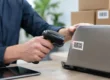
For a straightforward internal asset register, a Code 128 barcode is often a dependable choice. It stores an alphanumeric asset ID in a compact format and can be read by common handheld scanners. It suits organisations that scan items into stock, allocate them to staff or conduct annual checks.
QR codes hold more information and can be scanned by most smartphones. They are useful where staff need to open an internal asset record, inspection form or equipment manual from the label. However, a QR code must be printed at a suitable size with sufficient contrast. If it is too small, damaged or positioned on a curved surface, scan performance will suffer.
The best choice depends on your existing software and how people work. There is little value in fitting QR codes to every asset if your process relies on laser barcode scanners, and equally little value in printing barcodes if field staff only have phones. Test the proposed format before placing a large order.
Material and adhesive are not minor details
A label that falls off is not evidence. Material selection should reflect where the equipment is used, how often it is handled and the surface it will be applied to.
For office-based laptops, monitors and general equipment, durable polyester asset labels are a common option. They offer good print quality, strong adhesion and resistance to routine cleaning and handling. For equipment exposed to harder use, such as tools, warehouse devices or outdoor machinery, a tougher material and adhesive may be needed.
Surface condition is equally important. Labels adhere best to clean, dry, smooth surfaces. Dust, oil, textured plastic, rubberised coatings and heavily curved housings can all reduce performance. Where a label is being applied to an awkward surface, sample testing is the sensible route rather than assuming a standard adhesive will work.
Tamper-evident labels provide an additional level of protection. Depending on the construction, removing the label may leave a visible residue, reveal a void message or cause the label to fragment. This gives an immediate indication that an asset label has been interfered with and makes simple label swapping harder.
There is a trade-off. Tamper-evident materials are designed to show removal, so they are not ideal where labels must be transferred between cases, leased equipment or reusable containers. For fixed assets that should retain a permanent identity, they are often a strong choice.
Put labels where they can be checked
A label should be visible enough for routine scanning without being placed where normal use will quickly wear it away. On laptops, the underside or a protected area near the manufacturer plate is commonly suitable. On desktop equipment, choose a flat panel that remains accessible when the item is installed.
Avoid ventilation grilles, moving parts, screw heads, ports, removable batteries and safety warning labels. Do not cover manufacturer serial numbers, electrical ratings or conformity markings. Those details may be needed for repairs, safety checks and claims evidence.
For valuable items that are particularly vulnerable to theft, some organisations use two identifiers: a visible branded asset label for everyday control and a discreet secondary label in a less obvious location. This can help confirm identity if the primary label is removed. The secondary label should still be recorded in the asset register and applied consistently by trained staff.
The label only works with the record behind it
Insurers are interested in evidence, not just stickers. A labelled item must connect to accurate, maintained records. The asset register should show at least the unique ID, description, make and model, manufacturer serial number, purchase date, purchase value, normal location and responsible person or department.
For higher-value equipment, keep copies of invoices, photographs and any relevant valuation or maintenance documentation. If items regularly travel between sites, record the movement and the person responsible. This is particularly useful for schools, facilities teams, construction businesses and organisations with hybrid workers.
A simple process is usually more reliable than a complicated one that staff avoid. Label items when they arrive, scan them into the register, photograph high-value equipment where appropriate, and assign responsibility before issue. Then schedule physical checks at a frequency that reflects the value and mobility of the assets.
The following controls work well together:
- unique, sequential asset IDs linked to a current register;
- durable labels suited to the equipment and environment;
- barcode or QR scanning that matches your existing process;
- documented checks after moves, repairs, disposals and staff departures; and
- photographs and purchase evidence for high-value or specialist items.
Common mistakes that weaken asset evidence
The first is treating labels as a one-off purchase. Assets are replaced, moved and retired, so the register needs active ownership. If an old label remains on a disposed laptop or a new device is issued without being recorded, the audit trail soon loses value.
The second is ordering labels without considering the application. A low-cost paper label may be acceptable for short-term storage, but it is unlikely to withstand years on frequently handled IT equipment. Saving a small amount at the outset can mean relabelling hundreds of assets later.
The third is printing codes that cannot be scanned in real conditions. Barcode size, quiet zones, contrast and print quality matter. So does placing a code on a highly curved surface or under a protective case. A sample label tested with the actual scanner or phone is worth far more than a code that looks correct on screen.
Finally, do not assume that a tamper-evident label replaces physical security. Asset labels support identification and accountability. Locks, alarms, access control, secure storage and sensible issue procedures still have their own role, particularly where policy conditions require them.
Ordering labels with confidence
Before ordering, decide how many unique IDs are required, whether numbers should run sequentially, which barcode format your system reads, and whether your logo or ownership message is needed. Specify the label dimensions and the surface or environment it will face. This allows the right material and adhesive to be recommended from the start.
Security-Label.co.uk produces UK-made bespoke asset and tamper-evident labels with serial numbering, barcodes, QR codes and branded layouts. For unusual surfaces or demanding use, it is worth discussing the application rather than choosing purely by size or unit price.
A well-specified label does a quiet but valuable job: it gives every important asset a clear identity, helps staff maintain control, and leaves your organisation better prepared when a record needs to stand up to scrutiny.