
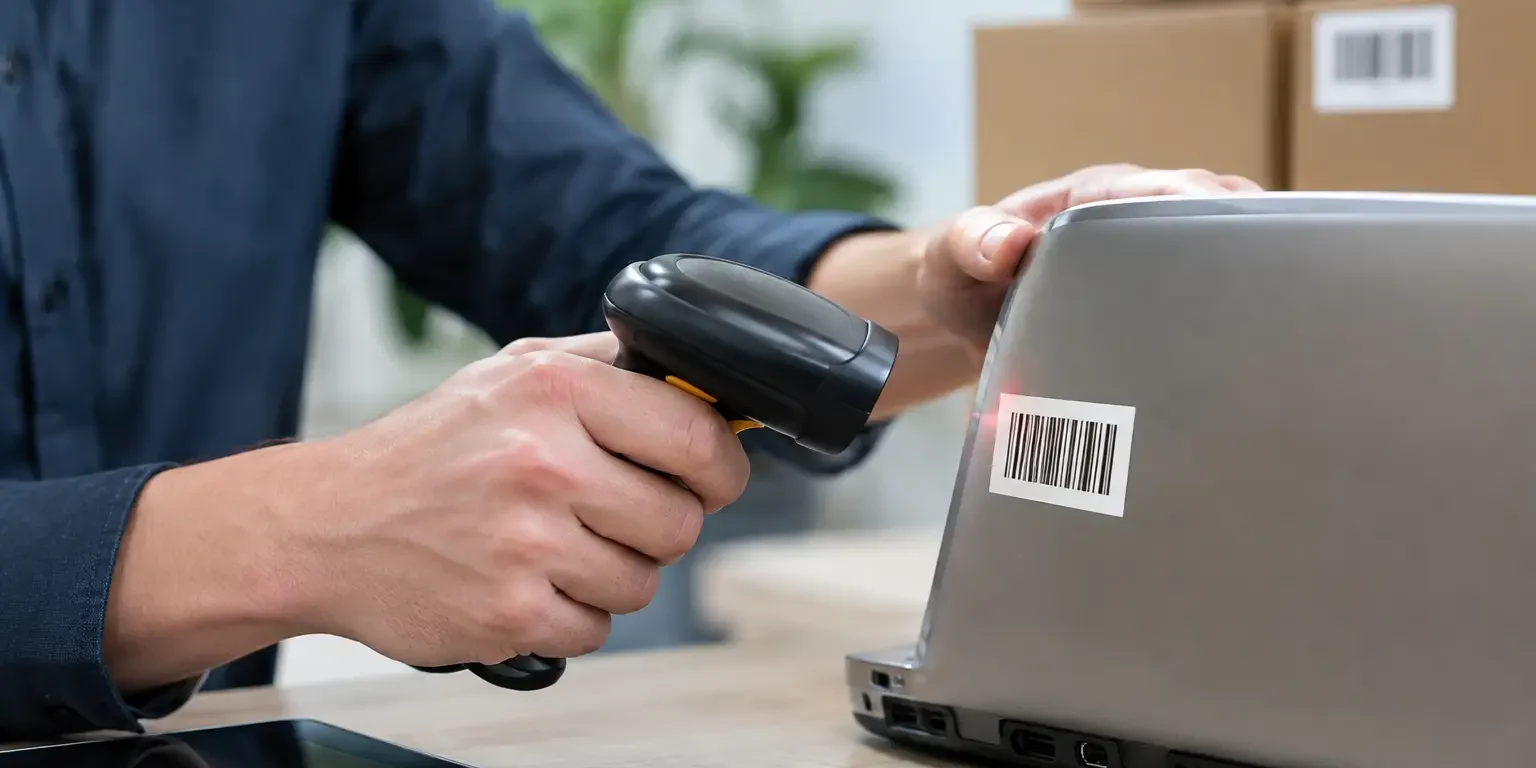
A laptop moves from an IT cupboard to a meeting room, a projector is lent to another department, and a power tool leaves site with a contractor. Without clear identification, each routine movement makes an asset register less reliable. Property marking gives equipment a visible identity that stays with it, making ownership, audits and recovery far more straightforward.
For UK organisations managing anything from office IT and school devices to plant, tools and medical equipment, the right marking system does more than put a name on an item. It supports day-to-day accountability, deters opportunist theft and gives staff a practical way to check what they are handling.
What property marking should achieve
A good property marking scheme links a physical item to a record in your asset management system. At the simplest level, that may be a company name and unique serial number. More often, it includes a barcode or QR code that can be scanned during stock checks, handovers and audits.
The key is consistency. If labels carry randomly formatted numbers, are placed in different positions or fall off after a few months, staff will stop trusting the data. A clear specification avoids this. Decide what each label must show, where it will be applied and who is responsible for assigning the reference number before ordering.
Visible identification also has a deterrent effect. Equipment marked with an organisation name, a unique asset number and a permanent-looking security label is less attractive to steal and more difficult to resell unnoticed. It is not a substitute for physical security or access controls, but it is a sensible, low-cost layer of protection.
Choosing the right property marking label
There is no single material that suits every asset. The right choice depends on the surface, environment, expected service life and whether you need evidence of removal. A label that works well on a clean, smooth laptop casing may not hold on a textured tool case, oily machinery or outdoor equipment.
Standard asset labels for controlled environments
For office furniture, computers, monitors, classroom resources and indoor equipment, a durable polyester asset label is usually the practical choice. It provides a professional finish, holds printed text and barcodes clearly, and resists the normal scuffs and cleaning associated with everyday use.
A strong permanent adhesive is generally appropriate where the label should remain in place for the working life of the item. Before committing to a large order, check the surface. Low-energy plastics, powder-coated finishes and heavily textured materials can need a more specialised adhesive.
Tamper-evident labels for higher-risk equipment
Where unauthorised removal is a concern, tamper-evident labels add a useful control. These labels are designed to show visible evidence if somebody attempts to peel them away. Depending on the material, they may leave a patterned residue, break apart or display an opened message.
They are particularly useful for IT equipment, calibrated instruments, secure storage, leased assets and equipment that moves between sites. The trade-off is permanence: once disturbed, the label cannot simply be reapplied. Keep replacement labels controlled and record when one is issued, so a legitimate repair or refurbishment does not create confusion in your audit trail.
Metal-effect and specialist labels for demanding use
For tougher environments, consider materials selected for abrasion resistance, temperature changes, moisture and regular handling. Metal-effect labels can give fixed plant, machinery and valuable tools a more permanent appearance, while specialist constructions may suit equipment exposed to cleaning chemicals or external conditions.
Material alone does not guarantee performance. Surface preparation matters. Apply labels to a clean, dry area free from dust, grease and polish. Allow the adhesive to bond properly before putting the item back into heavy use. This simple preparation step prevents many avoidable adhesion failures.
Decide what information belongs on the label
A label must be readable at the point of use. Too much information makes it cluttered; too little means staff still need to search for the right record. In most cases, a unique asset number is the essential element because it is the reliable link to the asset register.
Your organisation name or logo establishes ownership at a glance. A short instruction such as “Property of” or “Do not remove” can reinforce the message without taking up valuable space. For valuable or portable equipment, a telephone number or security contact may help someone return an item, although this should be considered carefully if it creates an unwanted public contact route.
Serial numbers should be printed in both human-readable text and a scannable format where practical. Human-readable text is useful when a scanner is unavailable, while a barcode speeds up routine inventory work and reduces keying errors.
Barcode or QR code?
For internal asset control, linear barcodes such as Code 128 are widely used because they can hold asset references efficiently and work with many standard scanners. They are a sound option if your current software and handheld devices are set up for linear barcode scanning.
QR codes hold more data in a smaller space and can often be scanned using a smartphone or tablet camera. They can be useful when the code needs to direct authorised users to an equipment record, operating instruction or maintenance page. However, the process should be planned properly. If the QR code points to information that changes, make sure the destination remains managed and available.
The best format depends on your existing system, not on what looks most modern. Check what your software accepts, what devices staff actually use and the smallest practical label size before deciding. Barcode quality, quiet zones and contrast all affect scan reliability, so allow enough space for the code to print clearly.
Build property marking into the asset lifecycle
Property marking works best when it is part of a defined process rather than a one-off labelling exercise. Apply the label when an item is received or commissioned, then record the same unique number in the asset register. Photographing high-value assets with their label visible can provide an additional reference for insurance, internal investigations or recovery.
When equipment is issued, transferred, repaired or disposed of, update the record at the same time. A label tells you what the item is; the register tells you where it should be, who is responsible for it and whether it remains in service. One without the other only solves half the problem.
For larger estates, use regular checks rather than waiting for an annual audit. A rolling programme – perhaps by department, room or site – is easier to manage and identifies missing equipment sooner. Scannable labels reduce the time involved, particularly where there are hundreds of similar assets.
It is also worth setting rules for replacements. If a label becomes damaged, remove the old reference from service before issuing a replacement. Do not casually reuse asset numbers from disposed equipment unless your system has a controlled method for doing so. Unique references prevent records from becoming ambiguous over time.
Common mistakes that weaken asset identification
The most common failure is selecting a label on appearance alone. A glossy label may look suitable on a sample sheet but fail when applied to a curved, rough or contaminated surface. Test the material in the real environment, especially for external, industrial or frequently cleaned equipment.
Another is using a barcode that is too small, too dense or poorly matched to the scanner. A code should be tested after printing and again after application. Curved surfaces and textured cases can affect scan performance.
Finally, avoid treating labels as the whole security plan. Property marking helps with deterrence, identification and control, but it should sit alongside sensible storage, sign-out procedures, access restrictions and accurate records. The stronger the surrounding process, the more value each label delivers.
A well-specified label order saves time long after it arrives. Security-Label.co.uk produces UK-made custom asset and tamper-evident labels with serial numbering, barcodes and layouts matched to the way your organisation records equipment. Start with the assets that cause the greatest audit, loss or accountability risk, test the right material, and build the system from there.